FROM RIANOVOSTI
BY Andrei Fedyashin, Political Commentator.
Anyone aspiring to U.S. citizenship had better act now before it's too late. Soon merely being born in that country may not be enough to qualify for citizenship. Immigrants and foreigners are always subject to much greater scrutiny during hard times. They are sized up by the local population to determine whether they are an asset or a liability to the country, or even a threat.
This is what is happening in the United States right now. Republicans are determined to amend the U.S. Constitution, which provides for jus soli ("right of soil") citizenship. This means that any child born in the country, regardless of the parents' citizenship, automatically has the right to apply for a U.S. passport once of age. But for how much longer?
Senior Republicans in both houses of the Congress have backed their party's push to revise the 14th Amendment, which legalized birthright citizenship back in 1868. The first hearings on the issue are scheduled for September or October, when Congress reconvenes after the summer recess.
Senate Republicans believe that the amendment is allowing for an "invasion by birth canal." Children "arriving" in America via this "canal" are referred to as "anchor babies," who make it easier for their non-citizen parents to obtain legal residency and eventually citizenship.
The Federation for American Immigration Reform (FAIR) has calculated that over 450,000 children of illegal immigrants "steal" U.S. citizenship every year, adding to the burden on U.S. taxpayers.
"People come here to have babies," Republican Sen. Lindsey Graham said. "They come here to drop a child. It's called 'drop and leave.' That shouldn't be the case. That attracts people here for all the wrong reasons."
But amending the U.S. Constitution is no simple matter. America's founding fathers were wise and had no illusions about the unruly masses. They protected their laws by double and triple lock to prevent voters from making impulsive and ill-advised decisions about the country's fundamental laws under the influence of heated rhetoric, leaving future generations to regret it.
Adding, revising or repealing an amendment requires two-thirds of both houses of Congress and three-fourths of the states to approve. The U.S. Constitution will turn 223 this September, and around 10,000 amendments have been proposed over that time; yet, only 27 eventually passed, while six more still have not been ratified by the states. Most of the amendments concern people's rights and liberties, or the election and terms of the president and members of Congress.
The United States started "closing the door" for the first time in 1882, when it restricted Chinese immigration. Since 1917, immigrants have been required to know rudimentary English; in 1920, immigration quotas were introduced; in 1924, all immigrants were required to have visas issued by a U.S. consulate.
The last time U.S. lawmakers dealt with immigration was in 1965, when they passed the Immigration and Nationality Act, which set quotas for the eastern and western hemispheres rather than for specific countries.
Whether the Republican-backed amendment will pass is unclear. It has as many opponents as supporters. Yet, the numbers of supporters have been growing lately due to the prolonged recession. America's attitude toward immigrants is changing. This nation of immigrants is beginning to show signs of moving toward the internal passport system we have in Russia. In Arizona and Virginia, police officers now can check the immigration status of anyone they suspect of being in the country illegally, even if they have not committed a crime -- something that was unheard-of until now. Admittedly, in Arizona this law is pending a court decision on its constitutionality.
All Americans used to see the logic behind the practice that most U.S. states still abide by. Why check people's papers if they have not committed a crime? Indeed, what right do law enforcement officers have to do so, if the country is not in a state of emergency or at war?
But the gloomy public sentiment is playing into the Republicans' hands. Congress is preparing for a big election in November, when all 435 seats in the House of Representatives and 37 of the 100 seats in the Senate will be contested. Many Americans now consider President Barack Obama a liar who has failed to keep his campaign promises, while others view the Republicans as their saviors from the Democrats' rule.
Cracking down on illegal immigration is a safe political move, so long as only illegal immigrants are targeted. The children of people with temporary residence or work visas will still enjoy birthright citizenship, or at least this is what the backers of the initiative claim.
Immigrants are no more welcome across the Atlantic. France, the Netherlands and Denmark are also planning to tighten immigration laws and step up deportations of illegal immigrants. French President Nicolas Sarkozy has ordered authorities to deport illegal Roma immigrants to Romania and dismantle their camps. Moreover, immigrants who have obtained French citizenship can now be stripped of their citizenship for breaking the law. France's Interior Minister Brice Hortefeux said that this punishment will apply to all felonies.
France immediately came under fire from human rights groups around the world, as if it was the first country in Europe to restrict the freedom of the Roma people. Italy did essentially the same thing two years ago.
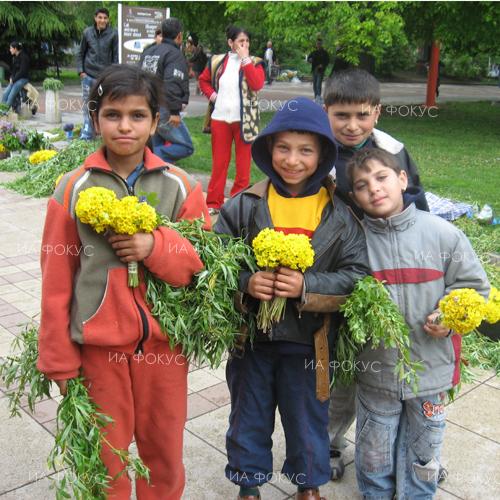
Germany also plans to deport 12,000 Roma people to Kosovo over the next one or two years. They came in 1999 after fleeing the bombing in Yugoslavia and the Kosovo war. Their children, who have grown up since then, do not even speak Serbian or Albanian, only German.
The municipal government in Copenhagen is also determined to expel hundreds of Roma from Eastern Europe. Belgium is also planning a "Gypsy purge". So France is not the first or only European country to crack down on the local gitanes.
In fact, few are aware that France is the only European country where jus soli in its pure form is still the law of the land. Ireland abolished it in 2005. To be eligible for birthright citizenship in an EU country now, one needs to have at least one parent who is a citizen, or to have lived in the country for at least eight years (Germany). Other countries require that a person has relatives who are citizens. All European nations have made the requirements for citizenship stricter.
Andrei Fedyashin, RIA Novosti political commentator
We are an organization dedicated to raising awareness about the history, culture and true lives of Romani people worldwide. We confront racism and oppression wherever we encounter it. We try to make connections with all the "isms" that make up western culture.
Wednesday, August 11, 2010
Sunday, August 8, 2010
GYPSY JAZZ
By GARY PANETTA (gpanetta@pjstar.com)
Journal Star
http://www.pjstar.com/
Posted Aug 08, 2010 @ 01:30 AM
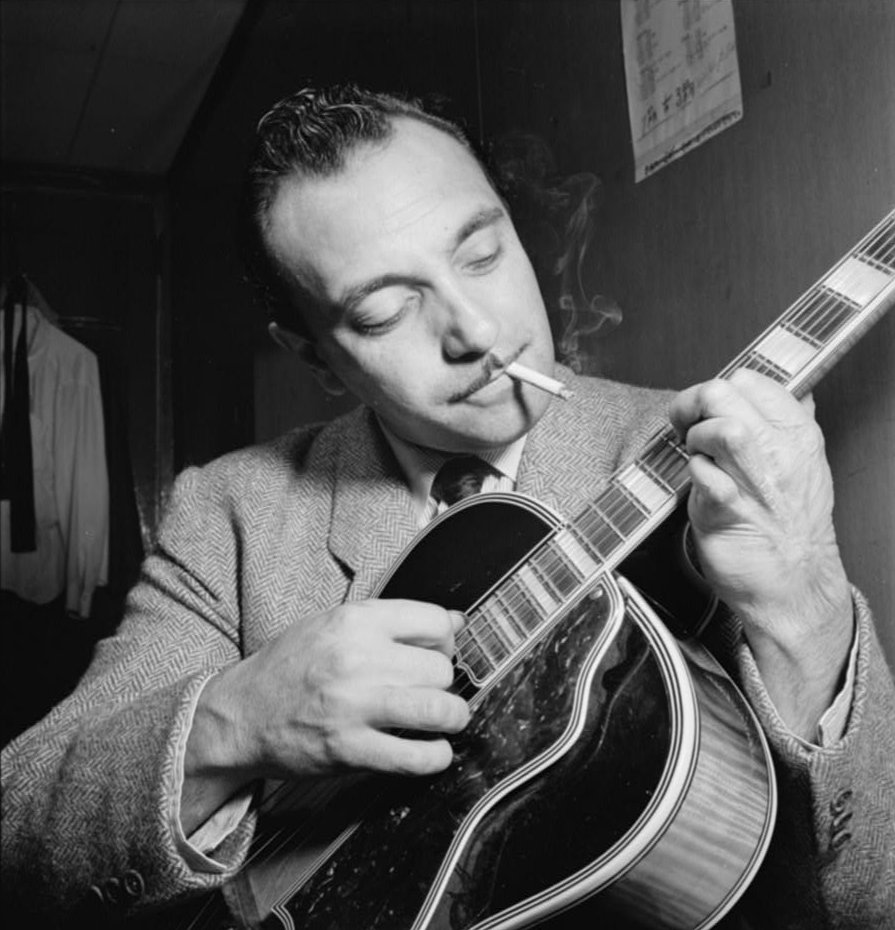
Melodic yet improvisatory, soulful yet sweet, sophisticated yet approachable on an ear-catching level that goes straight to the gut - and often to the heart as well - Gypsy jazz has a storied and august ancestry. On one side stretch roots leading back to a vast collection of sounds and styles preserved by gypsies as they wandered from country to country across Europe. On the other are connections going straight back to another kind of "people's music," the kind nurtured in early 20th century New Orleans by the likes of Louis Armstrong.
Fusing the two was the task of Belgium-born guitarist Django Reinhardt (1910-1953), a barely literate musician who escaped the fate of his fellow gypsies during the Holocaust in part because his musical gifts so charmed a jazz-loving Nazi official.
The charm persists among friendlier ears: Gypsy jazz remains popular in Europe, especially in France, where the Festival de Jazz Django Reinhardt is held annually at Samois-sur-Seine. But the music - also known in French as "jazz manouche" - has gained a following in North America as well, partly helped by Woody Allen's 1999 movie "Sweet and Lowdown," a mock-biopic about a fictional guitarist played by Sean Penn, who idolizes the great Gypsy-jazz guitarist.
---------------------------------------------------------------------------------------------------
As Eugene from Gogol Bordello said, "so many people love our music, but hate our guts."
I especially find it interesting that Gypsy jazz is 'so very' popular in France. Don't they see the irony?
And the beat goes on.........
Journal Star
http://www.pjstar.com/
Posted Aug 08, 2010 @ 01:30 AM
Melodic yet improvisatory, soulful yet sweet, sophisticated yet approachable on an ear-catching level that goes straight to the gut - and often to the heart as well - Gypsy jazz has a storied and august ancestry. On one side stretch roots leading back to a vast collection of sounds and styles preserved by gypsies as they wandered from country to country across Europe. On the other are connections going straight back to another kind of "people's music," the kind nurtured in early 20th century New Orleans by the likes of Louis Armstrong.
Fusing the two was the task of Belgium-born guitarist Django Reinhardt (1910-1953), a barely literate musician who escaped the fate of his fellow gypsies during the Holocaust in part because his musical gifts so charmed a jazz-loving Nazi official.
The charm persists among friendlier ears: Gypsy jazz remains popular in Europe, especially in France, where the Festival de Jazz Django Reinhardt is held annually at Samois-sur-Seine. But the music - also known in French as "jazz manouche" - has gained a following in North America as well, partly helped by Woody Allen's 1999 movie "Sweet and Lowdown," a mock-biopic about a fictional guitarist played by Sean Penn, who idolizes the great Gypsy-jazz guitarist.
---------------------------------------------------------------------------------------------------
As Eugene from Gogol Bordello said, "so many people love our music, but hate our guts."
I especially find it interesting that Gypsy jazz is 'so very' popular in France. Don't they see the irony?
And the beat goes on.........
Saturday, August 7, 2010
MUSEUM UPDATE
We've got some leads on grants and Voice of Roma will sponsor us under their non-profit status so we're hopeful. Grant seeking is no easy task. Perhaps one of our friends will win Lotto. Hi Ho.
We've also been getting great support from the Vashon and Seattle communities. We've been invited to attend the World Women's Day activities in October and our allies in Radical Women/Freedom Socialist Party have had some great, workable ideas to get the museum visibility and to raise awareness of the situation of the Romani people throughout Europe.
No one should underestimate the genocide being perpetrated against the Roma/Sinti of Europe.
EUROPE'S SHAME: ETHNIC CLEANSING IGNORED
FROM LEFT FUTURES
http://www.leftfutures.org/
Europe’s shame: ethnic cleansing ignored
BY Jan Lansman
Across Europe, eight million Romani citizens of the EU are subject to systematic segregation and persecution that is similar to the treatment of Jews in the first months of Nazi rule. It is to Europe’s shame that it is largely ignored by western media and governments alike — the interest they did show in the run up to the enlargement of the EU into east and central Europe seems to have been motivated only by the desire to prevent Romani migration to seek asylum in the West. In recent months, the following events have taken place in western Europe:
■In France, following an incident in western France, President Nicolas Sarkozy has announced the systematic eviction of French Travellers and migrant Roma from their homes and the expulsion of Romani EU citizens from France in spite of, say the Budapest-based European Roma Rights Centre (ERRC), both its own law on travellers’ rights and the EU Directive on freedom of movement.
■In Denmark, the mass arrest and deportation of 23 EU citizens of Romani origin in Copenhagen. Danish newspaper Politikien reports that Minister of Justice, Lars Barfoed, has promised “that the police will do everything possible to get criminals Roma expelled” but Mayor of Copenhagen, Frank Jensen, has asked “that the government do more to deport Romani criminals“. These have been condemned by opposition Radical and Unity List parties.
■In Portugal, widespread housing-related injustices including problems of access to social housing, substandard quality of housing, lack of access to basic utilities, residential segregation of Romani communities and other systemic violations of the right to housing are a violation of Portugal’s obligations under the European Social Charter according to ERRC and supported by Amnesty International.
■In Croatia, based on a judgement of the European Court of Human Rights, the unlawful segregation of Romani children into separate classes in violation of the European Convention on Human Rights.
■In Italy, continuing widespread harrassment and evictions of Roma including at least 61 forced evictions in Milan alone between January and April this year. The previous history of Berlusconi’s campaign of persecution is widely documented.
Roma have been socially marginalized for centuries: Tony Judt (in Postwar: A History of Europe Since 1945) says of the Roma that:
at the end of the twentieth century…. the prejudice and abuse to which they were exposed was common to every country in which they lived (not to mention places like Britain to which they were forbidden entry).”
They remain today about as impoverished, in relative terms at least, as they were in 1919. However, the Roma are now recognised by international governmental organisations such as the World Bank as “Europe’s largest and most vulnerable minority”. The EU Commission, in the context of the admission of those states with the largest concentrations of Romani inhabitants, did accept the culpability of governments by admitting
a failure of existing policies within both … the ‘old’ Member States and the new Member States to address adequately discrimination against these communities and to promote their social inclusion.”
Furthermore, Václav Havel, the Czech President, noted that the treatment of the Roma was a “litmus test” of a civil society.
The Roma have endured several distinct waves of persecution since the Treaty of Versailles established international legal protection of minority (i.e. collective) rights in 1919. The Roma, like the Jews, enjoyed no protection in practice from oppressive and segragationist policies of right-wing governments across Europe and in the Second World War suffered in the Porrajmos (Romani holocaust) a similar if less complete “final solution”. After the war, the focus of the new international human rights regime on individual rather than collective rights was of little benefit to Roma.
During the Cold War, the eighty per-cent of the Roma who lived in Soviet-bloc countries enjoyed improved access to health, education, housing and employment combined with coercive polices aimed at forced assimilation but relative deprivation, discrimination and even overt racism persisted. After the collapse of the Soviet Union, resentment about Romani welfare dependency fuelled new levels of racism, harrassment and discrimination, and Roma were hard hit by the painful transition to capitalism.
The accession of these countries to the EU in or after 2004, combined with a new international interest in minority rights as a result of the break-up of the USSR and Yugoslavia, did lead to a new recognition of the plight of the Roma, investment in NGOs devoted to advocacy about Romani rights and significant pressure on accession governments to clean up their act. Even after accession, when the leverage on these governments diminished, there has been continued investment in social inclusion programmes and an encouraging growth in Romani self-organisation.
However, the real motivation for the interest by western european governments in Romani rights in the east was the desire to prevent Romani migration to the west. The British government revealed this in 2001, for example, by placing immigration officers at Prague Airport to screen all passengers travelling to the UK. The aim was to detect people who wanted to claim asylum in the UK and prevent them from travelling. Statistics showed that Roma were 400 times more likely to be refused entry to the UK than non-Roma. In December 2004, the Law Lords ruled that the government had acted unlawfully. Now, many western governments have shifted, it seems, from (feigned) interest in Romani rights to a more direct and more sinister approach.
http://www.leftfutures.org/
Europe’s shame: ethnic cleansing ignored
BY Jan Lansman
Across Europe, eight million Romani citizens of the EU are subject to systematic segregation and persecution that is similar to the treatment of Jews in the first months of Nazi rule. It is to Europe’s shame that it is largely ignored by western media and governments alike — the interest they did show in the run up to the enlargement of the EU into east and central Europe seems to have been motivated only by the desire to prevent Romani migration to seek asylum in the West. In recent months, the following events have taken place in western Europe:
■In France, following an incident in western France, President Nicolas Sarkozy has announced the systematic eviction of French Travellers and migrant Roma from their homes and the expulsion of Romani EU citizens from France in spite of, say the Budapest-based European Roma Rights Centre (ERRC), both its own law on travellers’ rights and the EU Directive on freedom of movement.
■In Denmark, the mass arrest and deportation of 23 EU citizens of Romani origin in Copenhagen. Danish newspaper Politikien reports that Minister of Justice, Lars Barfoed, has promised “that the police will do everything possible to get criminals Roma expelled” but Mayor of Copenhagen, Frank Jensen, has asked “that the government do more to deport Romani criminals“. These have been condemned by opposition Radical and Unity List parties.
■In Portugal, widespread housing-related injustices including problems of access to social housing, substandard quality of housing, lack of access to basic utilities, residential segregation of Romani communities and other systemic violations of the right to housing are a violation of Portugal’s obligations under the European Social Charter according to ERRC and supported by Amnesty International.
■In Croatia, based on a judgement of the European Court of Human Rights, the unlawful segregation of Romani children into separate classes in violation of the European Convention on Human Rights.
■In Italy, continuing widespread harrassment and evictions of Roma including at least 61 forced evictions in Milan alone between January and April this year. The previous history of Berlusconi’s campaign of persecution is widely documented.
Roma have been socially marginalized for centuries: Tony Judt (in Postwar: A History of Europe Since 1945) says of the Roma that:
at the end of the twentieth century…. the prejudice and abuse to which they were exposed was common to every country in which they lived (not to mention places like Britain to which they were forbidden entry).”
They remain today about as impoverished, in relative terms at least, as they were in 1919. However, the Roma are now recognised by international governmental organisations such as the World Bank as “Europe’s largest and most vulnerable minority”. The EU Commission, in the context of the admission of those states with the largest concentrations of Romani inhabitants, did accept the culpability of governments by admitting
a failure of existing policies within both … the ‘old’ Member States and the new Member States to address adequately discrimination against these communities and to promote their social inclusion.”
Furthermore, Václav Havel, the Czech President, noted that the treatment of the Roma was a “litmus test” of a civil society.
The Roma have endured several distinct waves of persecution since the Treaty of Versailles established international legal protection of minority (i.e. collective) rights in 1919. The Roma, like the Jews, enjoyed no protection in practice from oppressive and segragationist policies of right-wing governments across Europe and in the Second World War suffered in the Porrajmos (Romani holocaust) a similar if less complete “final solution”. After the war, the focus of the new international human rights regime on individual rather than collective rights was of little benefit to Roma.
During the Cold War, the eighty per-cent of the Roma who lived in Soviet-bloc countries enjoyed improved access to health, education, housing and employment combined with coercive polices aimed at forced assimilation but relative deprivation, discrimination and even overt racism persisted. After the collapse of the Soviet Union, resentment about Romani welfare dependency fuelled new levels of racism, harrassment and discrimination, and Roma were hard hit by the painful transition to capitalism.
The accession of these countries to the EU in or after 2004, combined with a new international interest in minority rights as a result of the break-up of the USSR and Yugoslavia, did lead to a new recognition of the plight of the Roma, investment in NGOs devoted to advocacy about Romani rights and significant pressure on accession governments to clean up their act. Even after accession, when the leverage on these governments diminished, there has been continued investment in social inclusion programmes and an encouraging growth in Romani self-organisation.
However, the real motivation for the interest by western european governments in Romani rights in the east was the desire to prevent Romani migration to the west. The British government revealed this in 2001, for example, by placing immigration officers at Prague Airport to screen all passengers travelling to the UK. The aim was to detect people who wanted to claim asylum in the UK and prevent them from travelling. Statistics showed that Roma were 400 times more likely to be refused entry to the UK than non-Roma. In December 2004, the Law Lords ruled that the government had acted unlawfully. Now, many western governments have shifted, it seems, from (feigned) interest in Romani rights to a more direct and more sinister approach.
FRANCE STARTS REMOVING ROMANI CAMPS
FROM ERIO NEWS
news@erionet.org
BBC:
France starts removing Roma camps
Police began the operation to clear the makeshift homes and tents shortly after dawn
06/08/2010 - France has begun dismantling illegal Roma (Gypsy) camps following a presidential order for hundreds of such camps to be removed.
On Friday, about 100 people were moved on after police emptied a camp in the central city of Saint-Etienne.
The Roma had been living there in makeshift shelters and tents since May.
It was the first such move since President Nicolas Sarkozy announced a week ago plans to shut 300 illegal camps within the next three months.
Mr Sarkozy also said members of the Roma community who had committed public order offences would be deported immediately.
The order was a response to last month's attack on a police station in the Loire Valley town of Saint-Aignon by a group of young Roma.
'Shocking living standards'
Police began the operation to clear the makeshift homes and tents on council-owned land in Saint-Etienne shortly after dawn on Friday.
Officers first sealed off the area, and then removed the occupants.
The BBC's Hugh Schofield in Paris says a Romanian police officer was present, a sign that these members of the Roma community were recent immigrants from Eastern Europe.
President Sarkozy's government has recently struck a hard line towards what he has defined as "certain elements" in the Roma and traveller communities, our correspondent says.
This followed the riot in Saint-Aignon, which erupted after a gendarme shot and killed a traveller who had driven through a checkpoint, officials said.
The government's decision to clear 300 unauthorised camps - reportedly half the total in France - has been condemned by human rights groups, who say it is deliberately stigmatising a generally law-abiding section of society to win support among right-wing voters.
However, a poll out this week suggests that the majority of the population approves of the government's toughening line on law and order, our correspondent adds.
The government has said it cannot "tolerate" the camps, describing them as "sources of illegal trafficking, of profoundly shocking living standards, of exploitation of children for begging, of prostitution and crime".
There are hundreds of thousands of Roma or travelling people living in France who are part of long-established communities.
The other main Roma population is made up of recent immigrants, mainly from Romania and Bulgaria. They have the right to enter France without a visa but must have work or residency permits to settle over the long-term.
Link: http://www.bbc. co.uk/news/ world-europe- 10892669
news@erionet.org
BBC:
France starts removing Roma camps
Police began the operation to clear the makeshift homes and tents shortly after dawn
06/08/2010 - France has begun dismantling illegal Roma (Gypsy) camps following a presidential order for hundreds of such camps to be removed.
On Friday, about 100 people were moved on after police emptied a camp in the central city of Saint-Etienne.
The Roma had been living there in makeshift shelters and tents since May.
It was the first such move since President Nicolas Sarkozy announced a week ago plans to shut 300 illegal camps within the next three months.
Mr Sarkozy also said members of the Roma community who had committed public order offences would be deported immediately.
The order was a response to last month's attack on a police station in the Loire Valley town of Saint-Aignon by a group of young Roma.
'Shocking living standards'
Police began the operation to clear the makeshift homes and tents on council-owned land in Saint-Etienne shortly after dawn on Friday.
Officers first sealed off the area, and then removed the occupants.
The BBC's Hugh Schofield in Paris says a Romanian police officer was present, a sign that these members of the Roma community were recent immigrants from Eastern Europe.
President Sarkozy's government has recently struck a hard line towards what he has defined as "certain elements" in the Roma and traveller communities, our correspondent says.
This followed the riot in Saint-Aignon, which erupted after a gendarme shot and killed a traveller who had driven through a checkpoint, officials said.
The government's decision to clear 300 unauthorised camps - reportedly half the total in France - has been condemned by human rights groups, who say it is deliberately stigmatising a generally law-abiding section of society to win support among right-wing voters.
However, a poll out this week suggests that the majority of the population approves of the government's toughening line on law and order, our correspondent adds.
The government has said it cannot "tolerate" the camps, describing them as "sources of illegal trafficking, of profoundly shocking living standards, of exploitation of children for begging, of prostitution and crime".
There are hundreds of thousands of Roma or travelling people living in France who are part of long-established communities.
The other main Roma population is made up of recent immigrants, mainly from Romania and Bulgaria. They have the right to enter France without a visa but must have work or residency permits to settle over the long-term.
Link: http://www.bbc. co.uk/news/ world-europe- 10892669
Friday, August 6, 2010
ROMA CONDEMN INTOLERANCE IN EUROPE AT AUSCHWITZ
FROM THE EUROPEAN JEWISH PRESS
WARSAW (AFP)---Roma leaders condemned intolerance against their community across Europe Monday at the WWII Nazi German Auschwitz death camp where they marked 66 years since the massacre of nearly 3,000 Roma.
"Roma are still the victims of intolerance, even brutal aggression and instead there is talk of the divisions and conflicts between Sinti and Roma," Roman Kwiatkowski, head of the Roma Association of Poland said at the ceremonies, as quoted by the Polish PAP news agency.
Sinti are part of the Roma people, known also as gypsies, but with their own specific dialect.
"To all those who say this, I answer clearly at this place: we are a single, great people, especially on this day, International Remembrance Day of Roma Victims of the Holocaust," Kwiatkowski said.
"We are deprived of our rights ... The discrimination and persecution of Sinti and Roma must forever disappear from the life of the peoples of Europe," said Romani Rose, leader of Germany's Roma and Sinti.
Some 500 Roma from several countries gathered Monday at the foot of a monument commemorating the death of the last group of Roma, nearly 3,000 women, children and elderly people, who were gassed by the Nazis at the Auschwitz-Birkenau death camp on the night of August 2-3, 1944.
Nearly all of the 23,000 Roma and Sinti imprisoned at the "Zigeunerlager" at Auschwitz-Birkenau were killed by the Nazis between 1941-44.
Auschwitz-Birkenau, the most notorious of Nazi Germany's WWII death camps is located in the southern Polish town of Oswiecim, which like all of Poland was under German occupation during the Second World War.
The Warsaw-based Office for Democratic Institutions and Human Rights (ODIHR) of the Organisation for Security and Co-operation in Europe (OSCE) said Monday it had brought together some 80 Roma and non-Roma youth activists from several European countries for four days at the former Auschwitz camp for education about the Nazi's WWII genocide against the Roma.
Between 1940-45 Nazi Germany killed some 1.3 million people, including 1.1 million European Jews, at Auschwitz-Birkenau. Other victims included Poles, Roma, and Soviet prisoners of war.
WARSAW (AFP)---Roma leaders condemned intolerance against their community across Europe Monday at the WWII Nazi German Auschwitz death camp where they marked 66 years since the massacre of nearly 3,000 Roma.
"Roma are still the victims of intolerance, even brutal aggression and instead there is talk of the divisions and conflicts between Sinti and Roma," Roman Kwiatkowski, head of the Roma Association of Poland said at the ceremonies, as quoted by the Polish PAP news agency.
Sinti are part of the Roma people, known also as gypsies, but with their own specific dialect.
"To all those who say this, I answer clearly at this place: we are a single, great people, especially on this day, International Remembrance Day of Roma Victims of the Holocaust," Kwiatkowski said.
"We are deprived of our rights ... The discrimination and persecution of Sinti and Roma must forever disappear from the life of the peoples of Europe," said Romani Rose, leader of Germany's Roma and Sinti.
Some 500 Roma from several countries gathered Monday at the foot of a monument commemorating the death of the last group of Roma, nearly 3,000 women, children and elderly people, who were gassed by the Nazis at the Auschwitz-Birkenau death camp on the night of August 2-3, 1944.
Nearly all of the 23,000 Roma and Sinti imprisoned at the "Zigeunerlager" at Auschwitz-Birkenau were killed by the Nazis between 1941-44.
Auschwitz-Birkenau, the most notorious of Nazi Germany's WWII death camps is located in the southern Polish town of Oswiecim, which like all of Poland was under German occupation during the Second World War.
The Warsaw-based Office for Democratic Institutions and Human Rights (ODIHR) of the Organisation for Security and Co-operation in Europe (OSCE) said Monday it had brought together some 80 Roma and non-Roma youth activists from several European countries for four days at the former Auschwitz camp for education about the Nazi's WWII genocide against the Roma.
Between 1940-45 Nazi Germany killed some 1.3 million people, including 1.1 million European Jews, at Auschwitz-Birkenau. Other victims included Poles, Roma, and Soviet prisoners of war.
EUROPE
FROM IRISHTIMES.COM
Sarkozy under fire over sharp anti-Roma rhetoric
Fri, Aug 06, 2010
BY DANIEL McLAUGHLIN
FRENCH PRESIDENT Nicolas Sarkozy’s controversial vow to crack down on Gypsy criminals has brought the subject of Roma rights back into sharp focus across Europe.
Mr Sarkozy says he wants to revoke the French citizenship of immigrants who endanger the lives of police officers, and to make it easier to expel Roma who are in France illegally. He also pledged to tear down hundreds of Gypsy camps around the country, calling them a source of trafficking, prostitution and child exploitation.
The French leader launched his anti-crime campaign after clashes between Roma and police in the Loire Valley following the police shooting of a youth, and rioting in Grenoble that erupted when police shot dead a man of Arab origin who had allegedly just robbed a casino.
As interior minister in 2005, Mr Sarkozy pledged to deal with youth crime and immigration problems after rioting rippled out across France from the poor Paris suburbs. But critics accuse him of plunging into the problem now to distract attention from scandals that are dogging his administration and threatening his chances of re-election in 2012.
The Socialist Party leader, Martine Aubry, said Mr Sarkozy’s headline-grabbing campaign “harms France and its values by selective laws that are as iniquitous as they are unconstitutional”. “We will not let foreigners be stigmatised, nor French people of immigrant descent, nor Travellers, as the president of the republic and his majority have shamefully done,” she added.
At least one human rights group has threatened to sue Mr Sarkozy for inciting racial hatred with a policy that, it says, is not only deeply discriminatory but fails to distinguish between a community of Travellers that is long established in France and recent Roma arrivals from eastern Europe.
Most of the new Gypsy arrivals in France are from Romania and Bulgaria, which are believed to be home to more than three million Roma, who live on the margins of a mostly hostile mainstream society and have desperately poor standards of housing, education and health care.
Bulgaria’s government, which is launching its own crackdown on crime, has broadly supported Mr Sarkozy’s plans and said it will not oppose the deportation from France of Bulgarian Roma who have broken the law there.
Romania also said it was ready to co-operate with France, but prime minister Emil Boc insisted that the entire European Union had “a mutual obligation” to deal with issues concerning the bloc’s nine million or so Roma.
Other Romanian officials warned that deporting Roma for minor crimes could contravene their right to freedom of movement, while justice minister Catalin Predoiu told France that “co-operation does not mean using bulldozers to storm the camps and publicly blaming Romania.” Human rights groups were more severe in their criticism of Mr Sarkozy, and of countries in central and eastern Europe that are doing little or nothing to help their rapidly growing Roma communities.
“France’s decision to expel Roma communities without treating people case by case is a violation of human rights,” said Magda Matache, head of the Romani Criss group in Romania.
The European Roma Rights Centre in Hungary said Mr Sarkozy’s plan “would worsen the housing conditions of Travellers and Roma and may breach legal protections on freedom of movement and against collective expulsion.” It would also “reinforce discriminatory perceptions about Roma and Travellers and inflame public opinion against them,” the group claimed.
The Swedish government last week noted the “alarming situation” around Roma rights and sent a letter to the European Commission urging “the establishment of a binding plan of action ... for guaranteeing access to housing, education and the labour market” backed by EU funding.
Amnesty International urged Serbia this week to halt the planned destruction of a settlement in Belgrade that is home to some 70 Gypsy families.
2010 The Irish Times
Sarkozy under fire over sharp anti-Roma rhetoric
Fri, Aug 06, 2010
BY DANIEL McLAUGHLIN
FRENCH PRESIDENT Nicolas Sarkozy’s controversial vow to crack down on Gypsy criminals has brought the subject of Roma rights back into sharp focus across Europe.
Mr Sarkozy says he wants to revoke the French citizenship of immigrants who endanger the lives of police officers, and to make it easier to expel Roma who are in France illegally. He also pledged to tear down hundreds of Gypsy camps around the country, calling them a source of trafficking, prostitution and child exploitation.
The French leader launched his anti-crime campaign after clashes between Roma and police in the Loire Valley following the police shooting of a youth, and rioting in Grenoble that erupted when police shot dead a man of Arab origin who had allegedly just robbed a casino.
As interior minister in 2005, Mr Sarkozy pledged to deal with youth crime and immigration problems after rioting rippled out across France from the poor Paris suburbs. But critics accuse him of plunging into the problem now to distract attention from scandals that are dogging his administration and threatening his chances of re-election in 2012.
The Socialist Party leader, Martine Aubry, said Mr Sarkozy’s headline-grabbing campaign “harms France and its values by selective laws that are as iniquitous as they are unconstitutional”. “We will not let foreigners be stigmatised, nor French people of immigrant descent, nor Travellers, as the president of the republic and his majority have shamefully done,” she added.
At least one human rights group has threatened to sue Mr Sarkozy for inciting racial hatred with a policy that, it says, is not only deeply discriminatory but fails to distinguish between a community of Travellers that is long established in France and recent Roma arrivals from eastern Europe.
Most of the new Gypsy arrivals in France are from Romania and Bulgaria, which are believed to be home to more than three million Roma, who live on the margins of a mostly hostile mainstream society and have desperately poor standards of housing, education and health care.
Bulgaria’s government, which is launching its own crackdown on crime, has broadly supported Mr Sarkozy’s plans and said it will not oppose the deportation from France of Bulgarian Roma who have broken the law there.
Romania also said it was ready to co-operate with France, but prime minister Emil Boc insisted that the entire European Union had “a mutual obligation” to deal with issues concerning the bloc’s nine million or so Roma.
Other Romanian officials warned that deporting Roma for minor crimes could contravene their right to freedom of movement, while justice minister Catalin Predoiu told France that “co-operation does not mean using bulldozers to storm the camps and publicly blaming Romania.” Human rights groups were more severe in their criticism of Mr Sarkozy, and of countries in central and eastern Europe that are doing little or nothing to help their rapidly growing Roma communities.
“France’s decision to expel Roma communities without treating people case by case is a violation of human rights,” said Magda Matache, head of the Romani Criss group in Romania.
The European Roma Rights Centre in Hungary said Mr Sarkozy’s plan “would worsen the housing conditions of Travellers and Roma and may breach legal protections on freedom of movement and against collective expulsion.” It would also “reinforce discriminatory perceptions about Roma and Travellers and inflame public opinion against them,” the group claimed.
The Swedish government last week noted the “alarming situation” around Roma rights and sent a letter to the European Commission urging “the establishment of a binding plan of action ... for guaranteeing access to housing, education and the labour market” backed by EU funding.
Amnesty International urged Serbia this week to halt the planned destruction of a settlement in Belgrade that is home to some 70 Gypsy families.
2010 The Irish Times
Wednesday, August 4, 2010
TODAY IN HISTORY
On 4 August 1944 Anne Frank, 15, was arrested along with her sister, parents and four others by German security after hiding for two years inside a building in Amsterdam.
On 4 August 1964 the bodies of missing civil rights workers Michael Schwerner, Andrew Goodman and James Chaney were found buried in an earthen dam in Mississippi..
Oh yeah, on 4 August 2010 Bristol Palin announced that she would not marry the father of her child Tripp.
And this story is news. Lest we lose perspective eh.
On 4 August 1964 the bodies of missing civil rights workers Michael Schwerner, Andrew Goodman and James Chaney were found buried in an earthen dam in Mississippi..
Oh yeah, on 4 August 2010 Bristol Palin announced that she would not marry the father of her child Tripp.
And this story is news. Lest we lose perspective eh.
Tuesday, August 3, 2010
SARKOZY'S FRANCE
RECEIVED FROM ERIO
France's racial intolerance comes from the very top
Nicolas Sarkozy is most to blame for inciting the kind of brutality that sees immigrant women and children evicted by police
By Nabila Ramdani
Riot police have been criticised by the force used when breaking up a demonstration by evicted mothers.
Source: Reuters
Link to this video
PLEASE WATCH THIS VIDEO. IT'S VERY DISTURBING
http://www.guardian.co.uk/world/video/2010/aug02/france
02/08/2010 - Even by the standards of French "community" policing, it is a desperately harrowing video. Filmed by an amateur cameraman, it shows riot police in the notorious Seine-Saint- Denis suburb of Paris breaking up a demonstration by evicted mothers, some of them pregnant. Displaying the kind of respect and sensitivity normally reserved for prone drunks, the officers poke, manhandle and then drag the protestors along the road, along with their crying young children and babies.
The film was shot in the early morning on 21 July in a particularly volatile town called La Courneuve, outside a block of flats called Balzac. The decaying 15-storey building is set to be demolished, leaving dozens of squatters homeless. Many are young women originally from the Ivory Coast, and it was these who were mainly filmed as they were targeted while taking part in a sit-down protest. At least one pregnant woman faints, while a little boy is in hysterics as he is dragged along the ground under his mother. The armed, shaven-headed police meanwhile wear body armour and clearly display the badge of the CRS – the infamous Compagnie RĂ©publicaine de SĂ©curitĂ©, which made its name violently suppressing enemies of the state during the student and trade union riots of May 1968. Accompanied by a soundtrack of shrieks, tears and chants of "Leave us alone!", the images in La Courneuve have provoked calls for an enquiry into police brutality, and punishment for all those involved.
Despite the focus on France's legendary forces of law and order, however, there is no doubt that the man currently under greatest suspicion for inciting racial hatred and intimidation is President Nicolas Sarkozy himself. This is the politician, remember, who once described troublemakers from places like La Courneuve as "scum" who should be "washed away with a power hose". As interior minister, he revelled in his nickname of "Le Top Cop", sending heavily armed officers en masse towards the slightest sign of any kind of disturbance, no matter how trivial.
As predicted when he became president in 2007, Sarkozy's administration has been characterised by widespread social disorder, up to and including the kind of riots which broke out in Grenoble, eastern France, last month. Street battles saw shops and cars destroyed by fire, and shots were exchanged between the police and youths. In a separate disturbance in St-Aignan, in the centre of the country, masked gangs stormed a police station after a Gypsy was shot dead during a car chase.
Sarkozy immediately blamed the disturbances on immigrants, announcing a wide-ranging initiative aimed at keeping them in their place. This meant a "war on crime", with state-issue truncheons drawn to sort out what he described as serious "security problems" posed by "foreign-born" undesirables. Sarkozy, the ever radical rightwing thinker, also said he would withdraw French nationality to any immigrant involved in law-breaking as well as erring French citizens of foreign descent. Welfare payments to immigrants without official papers would be reviewed and minimum sentences for criminals would be raised. By the by, Sarkozy's police also started razing Gypsy camps, as the president pledged to expel Roma travellers in an manner already being likened to ethnic cleansing.
"We are suffering the consequences of 50 years of insufficiently regulated immigration which has led to a failure of integration, " Sarkozy added helpfully, in case anyone was in any doubt as to whom he viewed as the greatest threat to stability within the republic.
Quite where pregnant women and their children rank amid that threat, Sarkozy did not say, but his silence about La Courneuve video is truly deafening. As he struggles to distance himself from the numerous problems engulfing failed administration, one would hope that the heartbreaking cries of persecuted young mothers and their babies might make him realise that attacking soft targets like vulnerable immigrants is no kind of solution to anything.
Link: http://www.guardian.co.uk/commentisfree/2010/aug02-racial-intolerance-sarkozy
France's racial intolerance comes from the very top
Nicolas Sarkozy is most to blame for inciting the kind of brutality that sees immigrant women and children evicted by police
By Nabila Ramdani
Riot police have been criticised by the force used when breaking up a demonstration by evicted mothers.
Source: Reuters
Link to this video
PLEASE WATCH THIS VIDEO. IT'S VERY DISTURBING
http://www.guardian.co.uk/world/video/2010/aug02/france
02/08/2010 - Even by the standards of French "community" policing, it is a desperately harrowing video. Filmed by an amateur cameraman, it shows riot police in the notorious Seine-Saint- Denis suburb of Paris breaking up a demonstration by evicted mothers, some of them pregnant. Displaying the kind of respect and sensitivity normally reserved for prone drunks, the officers poke, manhandle and then drag the protestors along the road, along with their crying young children and babies.
The film was shot in the early morning on 21 July in a particularly volatile town called La Courneuve, outside a block of flats called Balzac. The decaying 15-storey building is set to be demolished, leaving dozens of squatters homeless. Many are young women originally from the Ivory Coast, and it was these who were mainly filmed as they were targeted while taking part in a sit-down protest. At least one pregnant woman faints, while a little boy is in hysterics as he is dragged along the ground under his mother. The armed, shaven-headed police meanwhile wear body armour and clearly display the badge of the CRS – the infamous Compagnie RĂ©publicaine de SĂ©curitĂ©, which made its name violently suppressing enemies of the state during the student and trade union riots of May 1968. Accompanied by a soundtrack of shrieks, tears and chants of "Leave us alone!", the images in La Courneuve have provoked calls for an enquiry into police brutality, and punishment for all those involved.
Despite the focus on France's legendary forces of law and order, however, there is no doubt that the man currently under greatest suspicion for inciting racial hatred and intimidation is President Nicolas Sarkozy himself. This is the politician, remember, who once described troublemakers from places like La Courneuve as "scum" who should be "washed away with a power hose". As interior minister, he revelled in his nickname of "Le Top Cop", sending heavily armed officers en masse towards the slightest sign of any kind of disturbance, no matter how trivial.
As predicted when he became president in 2007, Sarkozy's administration has been characterised by widespread social disorder, up to and including the kind of riots which broke out in Grenoble, eastern France, last month. Street battles saw shops and cars destroyed by fire, and shots were exchanged between the police and youths. In a separate disturbance in St-Aignan, in the centre of the country, masked gangs stormed a police station after a Gypsy was shot dead during a car chase.
Sarkozy immediately blamed the disturbances on immigrants, announcing a wide-ranging initiative aimed at keeping them in their place. This meant a "war on crime", with state-issue truncheons drawn to sort out what he described as serious "security problems" posed by "foreign-born" undesirables. Sarkozy, the ever radical rightwing thinker, also said he would withdraw French nationality to any immigrant involved in law-breaking as well as erring French citizens of foreign descent. Welfare payments to immigrants without official papers would be reviewed and minimum sentences for criminals would be raised. By the by, Sarkozy's police also started razing Gypsy camps, as the president pledged to expel Roma travellers in an manner already being likened to ethnic cleansing.
"We are suffering the consequences of 50 years of insufficiently regulated immigration which has led to a failure of integration, " Sarkozy added helpfully, in case anyone was in any doubt as to whom he viewed as the greatest threat to stability within the republic.
Quite where pregnant women and their children rank amid that threat, Sarkozy did not say, but his silence about La Courneuve video is truly deafening. As he struggles to distance himself from the numerous problems engulfing failed administration, one would hope that the heartbreaking cries of persecuted young mothers and their babies might make him realise that attacking soft targets like vulnerable immigrants is no kind of solution to anything.
Link: http://www.guardian.co.uk/commentisfree/2010/aug02-racial-intolerance-sarkozy
Monday, August 2, 2010
ROMANI THROUGHOUT EUROPE
FROM HUMAN RIGHTS IN IRELAND
Sarkozy, Dale Farm and the Persistent Vulnerability of Nomadic Minorities in Europe
By Darren O'Donovan
The events of the past week across Europe have underlined how Travellers, Gypsies and Roma remain ensnared in a cycle of social control and malign disengagement. Events in France and the United Kingdom illustrate the common grammar of Traveller/Roma exclusion within Ireland and other European states. They show the continuing power of majoritarian politics to make minorities visible on their own terms and to successfully drive a narrative of social control and surveillance.
Firstly, to the events of the past week in France, where President Nicolas Sarkozy has problematised the lifestyle of the entire French gens de voyage (Travellers) and Romany population, following the destruction of a police station and government property by 50 ‘travelling-people’ rioters in central France. The rioters were protesting the death of a 22 year, shot by police. To address the problems caused by the ‘some of the travelling people and Roma’, the French president summoned a meeting at the ElysĂ©e Palace. Using decree powers, the Interior Minister now plans to ‘evacuate’ 300 illegal settlements. The French Human Rights League has condemned the proposal for ‘ethnically targeted evictions of illegal settlements’, and notes that these communities are increasingly ‘scapegoats for the deficiencies of the state’. The conflation of the estimated 20,000 Eastern European Roma with the 400,000 generational French Travellers has facilitated the crisis rhetoric. The New York Times has also reported that the French government is investigating the use of Bulgarian and Romanian police to help their operations.
In demanding greater consideration of the broader context of these measures, it is vital to take into account the exceptionally strong findings recently made against France by the European Committee of Social Rights under the Revised European Social Charter. This collective complaint was brought by the European Roma Rights Centre in furtherance of its litigation strategy which has begun to successfully press States in a variety of venues, combining macro-appraisal of States housing frameworks with selective case law before the European Convention on Human Rights. This rights advocacy arc received its most prominent success in the landmark case of D.H. v Czech Republic where the European Court of Human Rights found structural educational exclusion of the local Roma population in the town of Ostrava.
In relation to France, the European Committee of Social Rights found that despite occasional positive results ‘there appears to have been a long period during which local authorities and the state have failed to take sufficient account of the specific needs of Travellers’. It underlined the obligation of states under Article 31 of the Charter to provide integrated and appropriate housing policies targeting Travellers. While France had instituted a requirement that appropriate sites be provided within the ‘Reception of Travellers Act 2000’, the implementation of this was too slow. In line with Irish experiences, a report of the Conseil General des Ponts et ChaussĂ©es had found that the implementation of the plans related exclusively or partially to the ‘reactions of neighbours’, ‘the strong reticence on the part of local elected officials’ and the ‘absence of real political will’. The inadequate implementation of this legislation was a violation of the Charter (the implementation rate of planned projects is said to be around 25%). Only half of the relevant communes are said to meet their obligations to provide appropriate accommodation. It was further found that not all the stopping places meet the required sanitary norms, established legislatively by France itself, which require access to drinking water and electricity, together with a management and security system. Where Travellers wished to settle permanently in caravans, both national government and local authorities had failed to mobilize resources to provide appropriate accommodation, particularly being sensitive to the needs of family units.
The Committee stressed that Travellers ‘have for many generations played a key role in French society and history’. It also noted that France had failed to take the necessary steps to improve the living conditions of Romani migrants from other States Parties. Eviction powers were described as overwide, as an echo of Ireland’s Housing (Miscellaneous Provisions) Act 1998, the Internal Security Act 2003, allows the police to intervene within 48 hours, without any need for a ruling by the administrative court. The Committee underlined that evictions are to take place in accordance with the applicable rules of procedure and these should be sufficiently protective of the rights of the persons concerned. In the civil and political sphere, electoral regulations limit French Travellers right to vote resulting in them having ‘virtually no political influence’. The issue of housing flowed inevitably into poverty with the Committee finding a violation of Article 30 regarding the right to protection against poverty and social exclusion. This demanded ‘an overall and co-ordinated approach, which should consist of an analytical framework, a set of priorities and measures to prevent and remove obstacles to access to fundamental rights’. The Committee underlined that central to the forming policy solutions was for Travellers cultural difference to be taken into account.
These regressive developments in France, have been matched within the United Kingdom, where the largest Irish Traveller and Romany Gypsy encampment in the United Kingdom, Dale Farm in Essex, will shortly be the scene of a mass eviction. The main body of the site is owned by a member of the Travelling Community, some of whom have been on the site since the 1960s. Many have joined over time having been displaced following cycles of evictions. This expansion led to plots being built on land purchased by Travellers themselves, which had the designation as ‘Green Belt’ (though one might note that it was previously used as a scrap metal yard). With no obligation on local authorities to meet the accommodation needs of Travellers, a number of those subject to eviction orders will have no alternative sites, while others may have offers of mainstream housing. The severe nature of the situation led to a warning being sent to the relevant Minister, under an urgent action procedure, by the chair of the United Nations Commission on the Elimination of Racial Discrimination, which stressed the need for the provision of alternative site, extra planning permissions where possible. A primary concern is also the conduct of evictions, which should be impact assessed and carried out without undue force by the relevant private bailiffs. The next step for the council will be the issuing of a 28 day notice of the eviction being carried out. A United Nations linked observation team will be present, and the Human Rights Centre of the University of Essex has also been particularly prominent in promoting legal and advocacy engagement with the situation. The Dale Farm situation will be the most visible event of a summer which has already brought severe cuts to funding for Traveller sites, and the promise of the reintroduction of those provisions of the Criminal Justice and Public Order Act 1994, which criminalises trespass. The Conservative/Liberal coalition has also plans to remove more progressive Ministerial circulars which placed a stronger valuation on Travellers cultural identity in the planning process.
These developments underline the common grammar of Traveller/Roma exclusion throughout Europe. Majoritarian politics continue to extract wide-ranging regressive measures from individual events, overriding policy making structures established by statute and mandated by international law. This, of course, occurred in the Irish context during the drafting the Housing (Miscellaneous Provisions) Act 1998, which criminalises trespass, and allows GardaĂ to direct the removal and confiscation of caravans without direct judicial consideration of relevant legal obligations, particularly the European Convention on Human Rights. Familiar also is the division of labour between local and national government, the national authorities commit to aims but do not appropriate implementation and accountability diffuses. Accountability does not simply refer to levels of provision, but to matters as simple as the visibility of statistics. In the Irish context, the clearest example has been the difficulties of simply extracting information regarding the use of extraordinary eviction powers against Travellers. The best description of such modern forms of exclusion is the Zygmunt Bauman’s term multifinal, meaning that government policy is separated out into an array of functions which can be combined into multiple meanings. National governments continue to present themselves as human rights compliant but encumbered by local hurdles, while local authorities cast themselves as well-meaning prisoners of undue demands. This goal displacement disperses accountability and allows anti-Travellerism to be presented as a reality that cannot be overcome.
Fundamental to all this remains the stereotyping of Travellers and Roma as cultures of poverty, whose central philosophy is that their existence is to be explained by deprivation and criminality. Our own debate surrounding Traveller ethnicity is of course fundamental to this, though it can often appear that ‘ethnicity’ offers little on the ground but legalism and conceptual navel gazing. Yet we must continue to underline that a key byproduct of all human rights law and advocacy must be the increased visibility of Traveller history and their lived reality to the majority population. This was underlined by European Court on Human Rights in its most recent case concerning Roma cultural identity in Spain, where it recognized:
‘…the importance of the beliefs that the applicant derives from belonging to the Roma community – a community which has its own values that are well established and deeply rooted in Spanish society.’
In the past few days, perhaps the bitterest taste has been left by the news reporting’s introductory tone, which seems to underline that significant quantities of viewers and readers simply do not know that a French Traveller population does exist and is in fact an estimated 400,000 strong.
Sarkozy, Dale Farm and the Persistent Vulnerability of Nomadic Minorities in Europe
By Darren O'Donovan
The events of the past week across Europe have underlined how Travellers, Gypsies and Roma remain ensnared in a cycle of social control and malign disengagement. Events in France and the United Kingdom illustrate the common grammar of Traveller/Roma exclusion within Ireland and other European states. They show the continuing power of majoritarian politics to make minorities visible on their own terms and to successfully drive a narrative of social control and surveillance.
Firstly, to the events of the past week in France, where President Nicolas Sarkozy has problematised the lifestyle of the entire French gens de voyage (Travellers) and Romany population, following the destruction of a police station and government property by 50 ‘travelling-people’ rioters in central France. The rioters were protesting the death of a 22 year, shot by police. To address the problems caused by the ‘some of the travelling people and Roma’, the French president summoned a meeting at the ElysĂ©e Palace. Using decree powers, the Interior Minister now plans to ‘evacuate’ 300 illegal settlements. The French Human Rights League has condemned the proposal for ‘ethnically targeted evictions of illegal settlements’, and notes that these communities are increasingly ‘scapegoats for the deficiencies of the state’. The conflation of the estimated 20,000 Eastern European Roma with the 400,000 generational French Travellers has facilitated the crisis rhetoric. The New York Times has also reported that the French government is investigating the use of Bulgarian and Romanian police to help their operations.
In demanding greater consideration of the broader context of these measures, it is vital to take into account the exceptionally strong findings recently made against France by the European Committee of Social Rights under the Revised European Social Charter. This collective complaint was brought by the European Roma Rights Centre in furtherance of its litigation strategy which has begun to successfully press States in a variety of venues, combining macro-appraisal of States housing frameworks with selective case law before the European Convention on Human Rights. This rights advocacy arc received its most prominent success in the landmark case of D.H. v Czech Republic where the European Court of Human Rights found structural educational exclusion of the local Roma population in the town of Ostrava.
In relation to France, the European Committee of Social Rights found that despite occasional positive results ‘there appears to have been a long period during which local authorities and the state have failed to take sufficient account of the specific needs of Travellers’. It underlined the obligation of states under Article 31 of the Charter to provide integrated and appropriate housing policies targeting Travellers. While France had instituted a requirement that appropriate sites be provided within the ‘Reception of Travellers Act 2000’, the implementation of this was too slow. In line with Irish experiences, a report of the Conseil General des Ponts et ChaussĂ©es had found that the implementation of the plans related exclusively or partially to the ‘reactions of neighbours’, ‘the strong reticence on the part of local elected officials’ and the ‘absence of real political will’. The inadequate implementation of this legislation was a violation of the Charter (the implementation rate of planned projects is said to be around 25%). Only half of the relevant communes are said to meet their obligations to provide appropriate accommodation. It was further found that not all the stopping places meet the required sanitary norms, established legislatively by France itself, which require access to drinking water and electricity, together with a management and security system. Where Travellers wished to settle permanently in caravans, both national government and local authorities had failed to mobilize resources to provide appropriate accommodation, particularly being sensitive to the needs of family units.
The Committee stressed that Travellers ‘have for many generations played a key role in French society and history’. It also noted that France had failed to take the necessary steps to improve the living conditions of Romani migrants from other States Parties. Eviction powers were described as overwide, as an echo of Ireland’s Housing (Miscellaneous Provisions) Act 1998, the Internal Security Act 2003, allows the police to intervene within 48 hours, without any need for a ruling by the administrative court. The Committee underlined that evictions are to take place in accordance with the applicable rules of procedure and these should be sufficiently protective of the rights of the persons concerned. In the civil and political sphere, electoral regulations limit French Travellers right to vote resulting in them having ‘virtually no political influence’. The issue of housing flowed inevitably into poverty with the Committee finding a violation of Article 30 regarding the right to protection against poverty and social exclusion. This demanded ‘an overall and co-ordinated approach, which should consist of an analytical framework, a set of priorities and measures to prevent and remove obstacles to access to fundamental rights’. The Committee underlined that central to the forming policy solutions was for Travellers cultural difference to be taken into account.
These regressive developments in France, have been matched within the United Kingdom, where the largest Irish Traveller and Romany Gypsy encampment in the United Kingdom, Dale Farm in Essex, will shortly be the scene of a mass eviction. The main body of the site is owned by a member of the Travelling Community, some of whom have been on the site since the 1960s. Many have joined over time having been displaced following cycles of evictions. This expansion led to plots being built on land purchased by Travellers themselves, which had the designation as ‘Green Belt’ (though one might note that it was previously used as a scrap metal yard). With no obligation on local authorities to meet the accommodation needs of Travellers, a number of those subject to eviction orders will have no alternative sites, while others may have offers of mainstream housing. The severe nature of the situation led to a warning being sent to the relevant Minister, under an urgent action procedure, by the chair of the United Nations Commission on the Elimination of Racial Discrimination, which stressed the need for the provision of alternative site, extra planning permissions where possible. A primary concern is also the conduct of evictions, which should be impact assessed and carried out without undue force by the relevant private bailiffs. The next step for the council will be the issuing of a 28 day notice of the eviction being carried out. A United Nations linked observation team will be present, and the Human Rights Centre of the University of Essex has also been particularly prominent in promoting legal and advocacy engagement with the situation. The Dale Farm situation will be the most visible event of a summer which has already brought severe cuts to funding for Traveller sites, and the promise of the reintroduction of those provisions of the Criminal Justice and Public Order Act 1994, which criminalises trespass. The Conservative/Liberal coalition has also plans to remove more progressive Ministerial circulars which placed a stronger valuation on Travellers cultural identity in the planning process.
These developments underline the common grammar of Traveller/Roma exclusion throughout Europe. Majoritarian politics continue to extract wide-ranging regressive measures from individual events, overriding policy making structures established by statute and mandated by international law. This, of course, occurred in the Irish context during the drafting the Housing (Miscellaneous Provisions) Act 1998, which criminalises trespass, and allows GardaĂ to direct the removal and confiscation of caravans without direct judicial consideration of relevant legal obligations, particularly the European Convention on Human Rights. Familiar also is the division of labour between local and national government, the national authorities commit to aims but do not appropriate implementation and accountability diffuses. Accountability does not simply refer to levels of provision, but to matters as simple as the visibility of statistics. In the Irish context, the clearest example has been the difficulties of simply extracting information regarding the use of extraordinary eviction powers against Travellers. The best description of such modern forms of exclusion is the Zygmunt Bauman’s term multifinal, meaning that government policy is separated out into an array of functions which can be combined into multiple meanings. National governments continue to present themselves as human rights compliant but encumbered by local hurdles, while local authorities cast themselves as well-meaning prisoners of undue demands. This goal displacement disperses accountability and allows anti-Travellerism to be presented as a reality that cannot be overcome.
Fundamental to all this remains the stereotyping of Travellers and Roma as cultures of poverty, whose central philosophy is that their existence is to be explained by deprivation and criminality. Our own debate surrounding Traveller ethnicity is of course fundamental to this, though it can often appear that ‘ethnicity’ offers little on the ground but legalism and conceptual navel gazing. Yet we must continue to underline that a key byproduct of all human rights law and advocacy must be the increased visibility of Traveller history and their lived reality to the majority population. This was underlined by European Court on Human Rights in its most recent case concerning Roma cultural identity in Spain, where it recognized:
‘…the importance of the beliefs that the applicant derives from belonging to the Roma community – a community which has its own values that are well established and deeply rooted in Spanish society.’
In the past few days, perhaps the bitterest taste has been left by the news reporting’s introductory tone, which seems to underline that significant quantities of viewers and readers simply do not know that a French Traveller population does exist and is in fact an estimated 400,000 strong.
LOLITA LEBRON
FROM THE WASHINGTON POST
Lolita Lebron, jailed for gun attack at U.S. Capitol in 1954, dies at 90
By Emma Brown
Washington Post Staff Writer
Monday, August 2, 2010
Lolita Lebron, a Puerto Rican nationalist known to some as a terrorist and to others as a near-mythic freedom fighter for her violent attack on the U.S. Capitol more than a half-century ago, died Aug. 1 at a hospital in San Juan of complications from respiratory disease. She was 90.
Ms. Lebron was called both fanatical and fearless for her efforts to draw attention to the cause of independence for her home island, claimed by the United States as spoils after the Spanish-American War and made an American commonwealth in 1952.
LeBron bought a ticket from New York to Washington on March 1, 1954. She and three fellow nationalists lunched at Union Station and then walked to the Capitol. They made their way to the House gallery. A security guard asked whether they were carrying cameras; they were not.
But they did have pistols. And in a crusade for Puerto Rico's independence that Ms. Lebron saw as no different from the uprising by America's 13 colonies against England in the 18th century, the four nationalists opened fire in the House chambers as more than 240 members of Congress debated an immigration bill.
"Viva Puerto Rico libre!" Ms. Lebron screamed. Chaos swirled as she unfurled a Puerto Rican flag. Five congressmen were struck by bullets, including 35-year-old Alvin Bentley, a Republican from Michigan who was hit in the chest.
Rep. James Van Zandt (R-Pa.) and a gallery spectator managed to wrestle away the assailants' guns. Arrested and handcuffed, the four nationalists were photographed outside the Capitol in an image splashed across newspaper front pages.
In the photograph, a striking Ms. Lebron wears a set jaw and a stylish skirt and jacket. She had expected to die that day, and police found a note in her purse along with a tube of lipstick and Bromo-Seltzer pills.
"My life I give for the freedom of my country," the note read. "The United States of America are betraying the sacred principles of mankind in their continuous subjugation of my country."
The shooting and its aftermath captivated Washington for weeks. Ms. Lebron and her fellow attackers had unleashed 29 bullets, leaving scars still visible at the Capitol, but none of the five injured congressmen died.
Ms. Lebron sat quietly during most of the trial, breaking her silence to tell the jury in a fiery 20-minute speech that she was "being crucified for the freedom of my country." She was sentenced to more than 50 years in prison.
In a move widely suspected to have been part of a prisoner swap to release CIA agents jailed in Cuba, President Jimmy Carter granted clemency to Ms. Lebron, two of her co-conspirators and a nationalist who had tried to kill President Harry S. Truman.
Released in 1979 after serving 25 years in prison, Ms. Lebron embarked on a tour of Puerto Rican population centers. The attack came four years after a failed attempt by Puerto Rican nationalists to assassinate Truman. It gave Ms. Lebron a place among the most famous of Latin American revolutionary figures, including Che Guevara and Pancho Villa.
"I am a revolutionary," she said at the time. "I hate bombs, but we might have to use them."
Lolita Lebron was born Nov. 19, 1919, in Lares, a Puerto Rican village where, in 1868, local men rose up against Spanish colonists in a legendary rebellion known as El Grito de Lares, "the cry of Lares."
Her father was a coffee farmer and her mother was a homemaker. Ms. Lebron, crowned "Queen of the Flowers of May" as a teenager, left Puerto Rico for a better life in New York in 1940. She left behind a baby daughter, who later died. Ms. Lebron's granddaughter is writer Irene Vilar. A complete list of survivors could not be confirmed.
Working as a seamstress in the garment district, Ms. Lebron lived in grinding poverty and found herself the object of racial discrimination. "They told me it was a paradise," Ms. Lebron said in a Washington Post interview in 2004. "This was no paradise."
She began corresponding with Harvard-educated Puerto Rican nationalist Pedro Albizu Campos after he was jailed for his part in the 1950 plot against Truman. Albizu Campos reputedly tapped Ms. Lebron to lead the siege against Congress as a last-ditch effort for independence.
Ms. Lebron in turn inspired other nationalists to violence. Between 1974 and 1983, Puerto Rico's Armed Forces of National Liberation set off dozens of bombs in Chicago and New York, killing six people and injuring more than 100.
But the independence movement did not gain momentum in Puerto Rico. When voters were asked in 1998 whether they wanted the island to become a state or an independent nation or retain their semiautonomous status, the prevailing response was "none of the above." Independence won 2.5 percent of the vote.
Renouncing violence
After returning home to Puerto Rico, Ms. Lebron became a symbol of nationalist pride. She continued to protest U.S. involvement on the island, but she renounced violence, saying her change of heart was rooted in religious revelations she had while she was in jail.
In 2001, she was arrested at age 81 while protesting the U.S. military's use of Vieques, a neighboring Caribbean island, as a bombing range. She was sentenced to 60 days in jail for trespassing. The bombing range was later closed.
Her pledge of nonviolence was tested in 2005 when the FBI shot and killed Filiberto Ojeda Rios, the Puerto Rican leader of a paramilitary pro-independence group. Ojeda Rios was wanted in connection with the 1983 robbery of an armored-truck depot in Connecticut. As angry crowds gathered in the streets, Ms. Lebron spoke out.
"She had a tremendous impact," Juan Manuel Garcia Passalacqua told the Chicago Tribune in 2006. "Young people were protesting in the streets, and there was talk of getting revenge. But Lolita told people, 'No violence!' -- and there was none."
Lolita Lebron, jailed for gun attack at U.S. Capitol in 1954, dies at 90
By Emma Brown
Washington Post Staff Writer
Monday, August 2, 2010
Lolita Lebron, a Puerto Rican nationalist known to some as a terrorist and to others as a near-mythic freedom fighter for her violent attack on the U.S. Capitol more than a half-century ago, died Aug. 1 at a hospital in San Juan of complications from respiratory disease. She was 90.
Ms. Lebron was called both fanatical and fearless for her efforts to draw attention to the cause of independence for her home island, claimed by the United States as spoils after the Spanish-American War and made an American commonwealth in 1952.
LeBron bought a ticket from New York to Washington on March 1, 1954. She and three fellow nationalists lunched at Union Station and then walked to the Capitol. They made their way to the House gallery. A security guard asked whether they were carrying cameras; they were not.
But they did have pistols. And in a crusade for Puerto Rico's independence that Ms. Lebron saw as no different from the uprising by America's 13 colonies against England in the 18th century, the four nationalists opened fire in the House chambers as more than 240 members of Congress debated an immigration bill.
"Viva Puerto Rico libre!" Ms. Lebron screamed. Chaos swirled as she unfurled a Puerto Rican flag. Five congressmen were struck by bullets, including 35-year-old Alvin Bentley, a Republican from Michigan who was hit in the chest.
Rep. James Van Zandt (R-Pa.) and a gallery spectator managed to wrestle away the assailants' guns. Arrested and handcuffed, the four nationalists were photographed outside the Capitol in an image splashed across newspaper front pages.
In the photograph, a striking Ms. Lebron wears a set jaw and a stylish skirt and jacket. She had expected to die that day, and police found a note in her purse along with a tube of lipstick and Bromo-Seltzer pills.
"My life I give for the freedom of my country," the note read. "The United States of America are betraying the sacred principles of mankind in their continuous subjugation of my country."
The shooting and its aftermath captivated Washington for weeks. Ms. Lebron and her fellow attackers had unleashed 29 bullets, leaving scars still visible at the Capitol, but none of the five injured congressmen died.
Ms. Lebron sat quietly during most of the trial, breaking her silence to tell the jury in a fiery 20-minute speech that she was "being crucified for the freedom of my country." She was sentenced to more than 50 years in prison.
In a move widely suspected to have been part of a prisoner swap to release CIA agents jailed in Cuba, President Jimmy Carter granted clemency to Ms. Lebron, two of her co-conspirators and a nationalist who had tried to kill President Harry S. Truman.
Released in 1979 after serving 25 years in prison, Ms. Lebron embarked on a tour of Puerto Rican population centers. The attack came four years after a failed attempt by Puerto Rican nationalists to assassinate Truman. It gave Ms. Lebron a place among the most famous of Latin American revolutionary figures, including Che Guevara and Pancho Villa.
"I am a revolutionary," she said at the time. "I hate bombs, but we might have to use them."
Lolita Lebron was born Nov. 19, 1919, in Lares, a Puerto Rican village where, in 1868, local men rose up against Spanish colonists in a legendary rebellion known as El Grito de Lares, "the cry of Lares."
Her father was a coffee farmer and her mother was a homemaker. Ms. Lebron, crowned "Queen of the Flowers of May" as a teenager, left Puerto Rico for a better life in New York in 1940. She left behind a baby daughter, who later died. Ms. Lebron's granddaughter is writer Irene Vilar. A complete list of survivors could not be confirmed.
Working as a seamstress in the garment district, Ms. Lebron lived in grinding poverty and found herself the object of racial discrimination. "They told me it was a paradise," Ms. Lebron said in a Washington Post interview in 2004. "This was no paradise."
She began corresponding with Harvard-educated Puerto Rican nationalist Pedro Albizu Campos after he was jailed for his part in the 1950 plot against Truman. Albizu Campos reputedly tapped Ms. Lebron to lead the siege against Congress as a last-ditch effort for independence.
Ms. Lebron in turn inspired other nationalists to violence. Between 1974 and 1983, Puerto Rico's Armed Forces of National Liberation set off dozens of bombs in Chicago and New York, killing six people and injuring more than 100.
But the independence movement did not gain momentum in Puerto Rico. When voters were asked in 1998 whether they wanted the island to become a state or an independent nation or retain their semiautonomous status, the prevailing response was "none of the above." Independence won 2.5 percent of the vote.
Renouncing violence
After returning home to Puerto Rico, Ms. Lebron became a symbol of nationalist pride. She continued to protest U.S. involvement on the island, but she renounced violence, saying her change of heart was rooted in religious revelations she had while she was in jail.
In 2001, she was arrested at age 81 while protesting the U.S. military's use of Vieques, a neighboring Caribbean island, as a bombing range. She was sentenced to 60 days in jail for trespassing. The bombing range was later closed.
Her pledge of nonviolence was tested in 2005 when the FBI shot and killed Filiberto Ojeda Rios, the Puerto Rican leader of a paramilitary pro-independence group. Ojeda Rios was wanted in connection with the 1983 robbery of an armored-truck depot in Connecticut. As angry crowds gathered in the streets, Ms. Lebron spoke out.
"She had a tremendous impact," Juan Manuel Garcia Passalacqua told the Chicago Tribune in 2006. "Young people were protesting in the streets, and there was talk of getting revenge. But Lolita told people, 'No violence!' -- and there was none."
Sunday, August 1, 2010
GYPSIES IN ENGLAND
New wave of evictions threatens GypsiesFamilies forced off their land and into illegal plots as minister drafts tougher trespass powers for police
The Observer, Sunday 1 August 2010
Dozens of families face the prospect of being pushed off plots of land they own and forced to move back into illegal "side-of-the road" and wasteland camping. Children will be unable to go to school and the elderly and infirm unable to access health services, say the campaigners.
Eric Pickles, the communities and local government minister, is drafting new laws to allow police more powers to evict and arrest people for trespass on public land. Planning laws are also being changed to stop applications for retrospective permission to put caravans on private land.
Pickles has already announced the reversal of previous efforts to provide "pitches" within all local authorities, abolishing the regional planning bodies which were to oversee provision of registered sites for travellers and ease the tensions caused by Gypsies being forced to camp illegally.
The grants that had been made available to councils to provide sites have also been slashed, although an estimated £18m a year is being spent on evictions.
"Gypsies are being squeezed on all sides in this wave of intolerance and racism which is unlike anything I've ever seen before," said Gratton Puxon, 69, a founder member of the Gypsy Council.
There are around 18,000 Gypsy and Traveller caravans in England, with 80% of them on authorised sites, land they own or rent. The numbers on illegal sites is so small, according to the government's own reports, that they could all be accommodated on one square mile.
The clampdown comes against a background of rising attacks against Roma people in Europe which has led to a demand for the EU to tackle what some are calling an attempted "ethnic cleansing" of travelling people. France has intensified its crackdown on Gypsies, announcing that 300 sites would be closed down in the next three months and any Gypsies found breaking the law would be deported. In 2008 the Italian government declared its Roma population was a national security risk, while in 2009 more than 100 Romanian Gypsies were attacked with bricks and bottles in Ireland and driven from their homes.
In Essex, where the statutory requirement for the provision of sites to accommodate 104 travelling people has now gone with the abolition of the regional planning assemblies, Basildon council issued an eviction notice last week on eight families living on their own land at one site. It is also embroiled in a court battle to evict a further 70 families from a site at Dale Farm, on the outskirts of the town. At the former scrapyard, bought by Irish Travellers 10 years ago and slowly transformed into a caravan park, families have been buying tents in preparation for their eviction. The camp's 50 or so children have no idea whether they will return to their primary school after the summer holidays.
"There is a very real sense of fear and people are very worried, especially the old people. There's people here ill and infirm who can't be going back on the road and there's nowhere to go," said Margaret McCarthy, 45, a mother of two who, like many others on the site, has vowed to fight the eviction, planning blockades and protests. "They're trying to destroy our pride and our dignity. The British government is trying to do away with Gypsies. It's scandalous, but nobody is watching, so nobody will help."
"It's seen as the last bastion of racism. It's not socially acceptable to express racism against ethnic minorities, but against Gypsies and travellers it's fine," said Emma Nuttall of the support group Friends, Families and Travellers.
"We are getting more and more calls from families who are in a panic about where they can and can't go, desperately trying to find bits of land they can buy and get planning permission for before the laws change, just so their kids can go to school."
Hostility from local communities is high. The Equality and Human Rights Commission Scotland is so concerned at the way many local newspapers are presenting issues with Gypsies, and the racist remarks left on their noticeboards, that it is contacting media outlets "to remind them that moderation of online comment boards is crucial in order to prevent the incitement of racial hatred".
At Dale Farm, Mary Ann McCarthy, 69, insists on an inspection of her immaculate static caravan and says the stereotype of "dirty gypsies" is not true.
"Travellers are very house proud; you always get a few people who leave a mess but so does any community." Born in a horse-drawn caravan, she is wistful of the days when her family would be welcomed by farmers who relied on Travellers to pick seasonal fruit and at the fairs where their horses were prized.
"We have never been treated really well, but it's never been as bad as now."
Additional reporting by Oliver Morrison
guardian.co.uk © Guardian News and Media Limited 2010
-------------------------------------------------------------------------------------
Please remember to observe a moment of silence and light a candle at noon tomorrow, Mon 2 Aug to commemorate the Roma/Sinti victims of the Porriamos, and for the Gypsies suffering throughout Europe today.
Saturday, July 31, 2010
DAY OF REMEMBRANCE
The escalating situation in France is intolerable. The treatment of the Romani people throughout Europe is genocidal.
For some reason, Sarkozy's blatant racist attacks on the Romani people is getting media attention. I am glad for that. At the same time, it is interesting that the expulsions from Italy, Germany, Sweden, Ireland....... have hardly been commented on. For ten years, Gypsies have been living on abandoned lead mines in Kosovo. They have been murdered fleeing their burning homes.
Gypsy kids are being taken from their families in Eastern Europe, women sterilized in the Czech Republic. This is nothing new, but it is current events.
How long are a people expected to beg for help. At least, for attention.
The history of the Roma/Sinti in Europe has been a viscious cycle----
Discrimination----Pograms in the East
Containment, deportation in the West
Back to the East.
And the beat goes on.......................
So, I ask that when you light a candle on Monday, in memory of the victims of the Porraimos, you also think of the Romani People who are suffering throughout Europe today. And think about what you can do.
For some reason, Sarkozy's blatant racist attacks on the Romani people is getting media attention. I am glad for that. At the same time, it is interesting that the expulsions from Italy, Germany, Sweden, Ireland....... have hardly been commented on. For ten years, Gypsies have been living on abandoned lead mines in Kosovo. They have been murdered fleeing their burning homes.
Gypsy kids are being taken from their families in Eastern Europe, women sterilized in the Czech Republic. This is nothing new, but it is current events.
How long are a people expected to beg for help. At least, for attention.
The history of the Roma/Sinti in Europe has been a viscious cycle----
Discrimination----Pograms in the East
Containment, deportation in the West
Back to the East.
And the beat goes on.......................
So, I ask that when you light a candle on Monday, in memory of the victims of the Porraimos, you also think of the Romani People who are suffering throughout Europe today. And think about what you can do.
EUROPEAN UNION
FROM THE GUARDIAN
guardian.co.uk World news
EU turning blind eye to discrimination against Roma, say human rights groups
Criticism comes in wake of France's decision to expel illegal Roma immigrants and destroy hundreds of their encampments
Leigh Phillips in Brussels, Kate Connolly in Berlin and Lizzy Davies in Paris guardian.co.uk, Friday 30 July 2010
Photograph: Jeff Pachoud/AFP/Getty Images
Amnesty International says the EU has committed a 'serious breach of human rights' towards the Roma. The European Union was today accused of "turning a blind eye" as countries across Europe carried out a wave of expulsions and introduced new legislation targeting the Roma.
Human rights groups criticised the EU for failing to address the real issues driving Europe's largest ethnic minority to migrate in the first place and for choosing not to upbraid countries for breaking both domestic and EU laws in their treatment of them.
The criticism came after France announced it would round up and expel illegal Roma immigrants and destroy hundreds of their encampments.
Elsewhere, it emerged that the city of Copenhagen had requested Danish government assistance to deport up to 400 Roma, and that Swedish police had expelled Roma in breach of its own and EU laws.
In Belgium a caravan of 700 Roma has been chased out of Flanders and forced to set up camp in French-speaking Wallonia in the south.
Italy, which in 2008 declared a state of emergency due to the presence of Roma, and evicted thousands of them, mainly to Romania and Bulgaria, is continuing to implement the policy to this day.
Germany is in the process of repatriating thousands of Roma children and adolescents to Kosovo, despite warnings they will face discrimination, appalling living conditions, lack of access to education as well as language problems, because many of them were born in Germany and do not speak Serbian or Albanian.
In eastern European countries that are EU members, such as the Czech Republic, Hungary, Slovakia, Romania and Bulgaria, accounts are rife of widespread discrimination against Roma, including physical attacks.
Amnesty International said the EU had "turned a blind eye" to what it called a "serious breach of human rights" towards Europe's Roma, who are roughly estimated to number about 16 million.
"There is a clear and systemic programme of EU governments targeting Roma," said Anneliese Baldaccini, a lawyer at Amnesty's EU office.
The Budapest-based European Roma Rights Centre (ERRC), which monitors the situation of Roma in Europe, called on the EU to be "much more forthright" in pointing out to member states "the clear requirements of the free movement law".
"Poverty, discrimination and a whole host of things make life unbearable for Roma in their countries of origin," said the ERRC's executive director, Robert Kushen. "We would welcome strong EU involvement to address some of these issues," he said.
The campaign groups were responding to the European Commission's insistence this week that the issue was one for individual states to handle.
"When it comes to Roma and the possibility of expelling them, this is up to the member states to deal with – in this case France – and for them to decide how they are going to implement the law," said Matthew Newman, spokesman for the European justice commissioner, Viviane Reding.
French president Nicholas Sarkozy was this week accused of pursuing a "xenophobic" and "discriminatory" crackdown on the country's 400,000 Travellers, Gypsies and Roma – most of whom have French citizenship.
Interior minister Brice Hortefeux announced new measures including the dismantling of about 300 encampments and the "quasi-immediate" expulsion to Romania or Bulgaria of Roma with a criminal record.
Amnesty said the EU should penalise countries that have persistently failed to uphold the human rights of Roma. Among the harshest measures applicable under the charter of fundamental rights that came into force with the Lisbon treaty last year is the withdrawal of voting rights, or even expulsion from the union.
"The EU under the Lisbon Treaty...has the responsibility to address human rights within the 27 member states," said Amnesty's executive officer for legal affairs in the European Union, Susanna Mehtonen.
Campaign groups say the EU's failure to intervene calls into question its commitment to the Charter of Fundamental Rights that came into force with the passage of the Lisbon Treaty last year, and was heralded as a "new dawn" for human rights in Europe.
They have accused Brussels of cowardice when it comes to the Roma. While the commission has no competence to defend gay rights, either, it has frequently been ready to criticise homophobic legislation in eastern Europe – largely, it is believed, because gay rights are well established in western European countries, unlike the rights of Roma.
Guardian.co.uk © Guardian News and Media Limited 2010
guardian.co.uk World news
EU turning blind eye to discrimination against Roma, say human rights groups
Criticism comes in wake of France's decision to expel illegal Roma immigrants and destroy hundreds of their encampments
Leigh Phillips in Brussels, Kate Connolly in Berlin and Lizzy Davies in Paris guardian.co.uk, Friday 30 July 2010
Photograph: Jeff Pachoud/AFP/Getty Images
Amnesty International says the EU has committed a 'serious breach of human rights' towards the Roma. The European Union was today accused of "turning a blind eye" as countries across Europe carried out a wave of expulsions and introduced new legislation targeting the Roma.
Human rights groups criticised the EU for failing to address the real issues driving Europe's largest ethnic minority to migrate in the first place and for choosing not to upbraid countries for breaking both domestic and EU laws in their treatment of them.
The criticism came after France announced it would round up and expel illegal Roma immigrants and destroy hundreds of their encampments.
Elsewhere, it emerged that the city of Copenhagen had requested Danish government assistance to deport up to 400 Roma, and that Swedish police had expelled Roma in breach of its own and EU laws.
In Belgium a caravan of 700 Roma has been chased out of Flanders and forced to set up camp in French-speaking Wallonia in the south.
Italy, which in 2008 declared a state of emergency due to the presence of Roma, and evicted thousands of them, mainly to Romania and Bulgaria, is continuing to implement the policy to this day.
Germany is in the process of repatriating thousands of Roma children and adolescents to Kosovo, despite warnings they will face discrimination, appalling living conditions, lack of access to education as well as language problems, because many of them were born in Germany and do not speak Serbian or Albanian.
In eastern European countries that are EU members, such as the Czech Republic, Hungary, Slovakia, Romania and Bulgaria, accounts are rife of widespread discrimination against Roma, including physical attacks.
Amnesty International said the EU had "turned a blind eye" to what it called a "serious breach of human rights" towards Europe's Roma, who are roughly estimated to number about 16 million.
"There is a clear and systemic programme of EU governments targeting Roma," said Anneliese Baldaccini, a lawyer at Amnesty's EU office.
The Budapest-based European Roma Rights Centre (ERRC), which monitors the situation of Roma in Europe, called on the EU to be "much more forthright" in pointing out to member states "the clear requirements of the free movement law".
"Poverty, discrimination and a whole host of things make life unbearable for Roma in their countries of origin," said the ERRC's executive director, Robert Kushen. "We would welcome strong EU involvement to address some of these issues," he said.
The campaign groups were responding to the European Commission's insistence this week that the issue was one for individual states to handle.
"When it comes to Roma and the possibility of expelling them, this is up to the member states to deal with – in this case France – and for them to decide how they are going to implement the law," said Matthew Newman, spokesman for the European justice commissioner, Viviane Reding.
French president Nicholas Sarkozy was this week accused of pursuing a "xenophobic" and "discriminatory" crackdown on the country's 400,000 Travellers, Gypsies and Roma – most of whom have French citizenship.
Interior minister Brice Hortefeux announced new measures including the dismantling of about 300 encampments and the "quasi-immediate" expulsion to Romania or Bulgaria of Roma with a criminal record.
Amnesty said the EU should penalise countries that have persistently failed to uphold the human rights of Roma. Among the harshest measures applicable under the charter of fundamental rights that came into force with the Lisbon treaty last year is the withdrawal of voting rights, or even expulsion from the union.
"The EU under the Lisbon Treaty...has the responsibility to address human rights within the 27 member states," said Amnesty's executive officer for legal affairs in the European Union, Susanna Mehtonen.
Campaign groups say the EU's failure to intervene calls into question its commitment to the Charter of Fundamental Rights that came into force with the passage of the Lisbon Treaty last year, and was heralded as a "new dawn" for human rights in Europe.
They have accused Brussels of cowardice when it comes to the Roma. While the commission has no competence to defend gay rights, either, it has frequently been ready to criticise homophobic legislation in eastern Europe – largely, it is believed, because gay rights are well established in western European countries, unlike the rights of Roma.
Guardian.co.uk © Guardian News and Media Limited 2010
Friday, July 30, 2010
CZECH REPUBLIC
FROM THE PRAGUE DAILY MONITOR
EduMin promises money for Romani Holocaust info centre
ÄŚTK
30 July 2010
Hodonin u Kunstatu, South Moravia, July 29 (CTK) - The Czech state should find money for the construction of a Romany Holocaust Information and Education Centre on the spot of a former internment camp for Romanies in Hodonin u Kunstatu, Education Minister Josef Dobes told journalists yesterday.
"It may be good to send a moral signal during a crisis," Dobes said.
He admitted that he temporarily stopped all investment and is seeking how to save money. But the Romany Holocaust Centre may be an exception.
The previous Czech government earmarked 90 million crowns for the centre. The Education Ministry bought the area of the former camp, now used as a recreation facility, for 20 million crowns last year.
Dobes plans to present the budget for the centre's construction to the government in October.
Michal Kocab, government human rights commissioner, said this would be the first centre focusing on Romany Holocaust in the world.
Some 1300 Romanies went through the Hodonin internment camp operating from August 1942 to December 1943. Over 200 died there and the rest of the inmates were moved to the Oswiecim (Auschwitz) extermination camp where most of them perished. In total, about 580 of 6000 Czech Romanies returned from Nazi camps after World War Two.
Lucie Matejkova, from Brno-based Roma Culture Museum, said the centre should be open both to the general public and researchers.
EduMin promises money for Romani Holocaust info centre
ÄŚTK
30 July 2010
Hodonin u Kunstatu, South Moravia, July 29 (CTK) - The Czech state should find money for the construction of a Romany Holocaust Information and Education Centre on the spot of a former internment camp for Romanies in Hodonin u Kunstatu, Education Minister Josef Dobes told journalists yesterday.
"It may be good to send a moral signal during a crisis," Dobes said.
He admitted that he temporarily stopped all investment and is seeking how to save money. But the Romany Holocaust Centre may be an exception.
The previous Czech government earmarked 90 million crowns for the centre. The Education Ministry bought the area of the former camp, now used as a recreation facility, for 20 million crowns last year.
Dobes plans to present the budget for the centre's construction to the government in October.
Michal Kocab, government human rights commissioner, said this would be the first centre focusing on Romany Holocaust in the world.
Some 1300 Romanies went through the Hodonin internment camp operating from August 1942 to December 1943. Over 200 died there and the rest of the inmates were moved to the Oswiecim (Auschwitz) extermination camp where most of them perished. In total, about 580 of 6000 Czech Romanies returned from Nazi camps after World War Two.
Lucie Matejkova, from Brno-based Roma Culture Museum, said the centre should be open both to the general public and researchers.
CATHOLIC BISHOPS IN FRANCE
FROM THE INDEPENDENT CATHOLIC NEWS.
------------------------------------------------------------------------
We always appreciate support. I have to hope that these bishops don't end up being investigated for "social activism" like the nuns in Seattle WA who have been accused of "establishing homes for women and children victims of domestic violence".
------------------------------------------------------------------------
France: Church defends Roma, Gitanes from repressive new laws
Posted: Thursday, July 29, 2010 6:56 pm
President Nicolas Sarkozy’s new laws toward the Gitanes and Roma (French Gypsy and Traveller) peoples have been criticized by the French Catholic Church.
In the document the Bishops say they deplore the way the Roma and Gitane people are being scapegoated by society. New legislation being introduced by Sarkozy is stirring up prejudice, they said.
Some French bishops have now lent their support to an appeal from the “Association Nationale des Gens du Voyage Catholiques' which asks Sarkozy to “renounce making flamboyant announcements and to find instead concerted political and determined political responses” to the plight of the Travelling communities.
After a number of violent community clashes in France, especially in the village of Saint-Aignan, the minister of the interior Brice Hortefeux announced yesterday that half of the 300 nomadic camps would be evacuated within three months.
Sarkozy has been criticised for not distinguishing between the different itinerant communities, or understanding their different problems. The Romanian and Bulgarian Roma people are a more recent minority in France. There are 400,000 Gitanes, who are almost all French. Only a third of these are nomads.
Source: MISNA
------------------------------------------------------------------------
We always appreciate support. I have to hope that these bishops don't end up being investigated for "social activism" like the nuns in Seattle WA who have been accused of "establishing homes for women and children victims of domestic violence".
------------------------------------------------------------------------
France: Church defends Roma, Gitanes from repressive new laws
Posted: Thursday, July 29, 2010 6:56 pm
President Nicolas Sarkozy’s new laws toward the Gitanes and Roma (French Gypsy and Traveller) peoples have been criticized by the French Catholic Church.
In the document the Bishops say they deplore the way the Roma and Gitane people are being scapegoated by society. New legislation being introduced by Sarkozy is stirring up prejudice, they said.
Some French bishops have now lent their support to an appeal from the “Association Nationale des Gens du Voyage Catholiques' which asks Sarkozy to “renounce making flamboyant announcements and to find instead concerted political and determined political responses” to the plight of the Travelling communities.
After a number of violent community clashes in France, especially in the village of Saint-Aignan, the minister of the interior Brice Hortefeux announced yesterday that half of the 300 nomadic camps would be evacuated within three months.
Sarkozy has been criticised for not distinguishing between the different itinerant communities, or understanding their different problems. The Romanian and Bulgarian Roma people are a more recent minority in France. There are 400,000 Gitanes, who are almost all French. Only a third of these are nomads.
Source: MISNA
Thursday, July 29, 2010
PORRIAMOS REMEMBRANCE
This coming Monday, 2 Aug. is the Remembrance Day for the Roma/Sinti victims of the Holocaust/Porraimos. On the night of 1 Aug. 1944 almost 4000 Roma/Sinti were murdered in auschwitz.
To commemorate the event, we are asking people, wherever they are, whatever they're doing, to light a candle and have a moment of silence for the Gypsy victims of the Holocaust at NOON on MONDAY 2 Aug.
FRANCE
FROM EUROPEAN ROMA RIGHTS CENTER
ERRC URGES FRENCH PRESIDENT TO HALT MASS EVICTION AND EXPULSION PLANS FOR ROMA AND TRAVELLERS
BUDAPEST, PARIS, 29 JULY 2010: In reaction to French President Nicolas Sarkozy’s plan to systematically evict French Travellers and migrant Roma from their homes and collectively expel Roma EU citizens from France, the European Roma Rights Centre (ERRC) today called for an end to plans which would lead to gross human rights violations of these marginalised groups.
In a letter to the President, the ERRC stated that the French Government’s plan would worsen the housing conditions of Travellers and Roma and may breach legal protections on freedom of movement and against collective expulsion. The ERRC also noted that the President’s plan reinforces discriminatory perceptions about Roma and Travellers and inflames public opinion against them.
In reaction to the President’s plan, ERRC Executive Director Robert Kushen stated, “Last year the European Committee of Social Rights found that France violated the European Social Charter by failing to provide adequate accommodations to Travellers and migrant Roma. If the Government wants to address the problem of illegal settlements, it should start by fully implementing French law that requires the creation of an adequate number of halting sites for Travellers with appropriate services. The scapegoating of Travellers and Roma is not going to solve the problem.”
The ERRC also called on the President to respect and protect the right of free movement for all EU citizens, including those of Roma origin, and to avoid the collective expulsion of Roma from French territory.
ERRC URGES FRENCH PRESIDENT TO HALT MASS EVICTION AND EXPULSION PLANS FOR ROMA AND TRAVELLERS
BUDAPEST, PARIS, 29 JULY 2010: In reaction to French President Nicolas Sarkozy’s plan to systematically evict French Travellers and migrant Roma from their homes and collectively expel Roma EU citizens from France, the European Roma Rights Centre (ERRC) today called for an end to plans which would lead to gross human rights violations of these marginalised groups.
In a letter to the President, the ERRC stated that the French Government’s plan would worsen the housing conditions of Travellers and Roma and may breach legal protections on freedom of movement and against collective expulsion. The ERRC also noted that the President’s plan reinforces discriminatory perceptions about Roma and Travellers and inflames public opinion against them.
In reaction to the President’s plan, ERRC Executive Director Robert Kushen stated, “Last year the European Committee of Social Rights found that France violated the European Social Charter by failing to provide adequate accommodations to Travellers and migrant Roma. If the Government wants to address the problem of illegal settlements, it should start by fully implementing French law that requires the creation of an adequate number of halting sites for Travellers with appropriate services. The scapegoating of Travellers and Roma is not going to solve the problem.”
The ERRC also called on the President to respect and protect the right of free movement for all EU citizens, including those of Roma origin, and to avoid the collective expulsion of Roma from French territory.
Wednesday, July 28, 2010
DALE FARM ENGLAND
guardian.co.uk
Dale Farm Travellers: 'We won't just get up and leave' At Dale Farm in Essex, the UK's largest Gypsy and Traveller site, families are braced for one of the biggest evictions in British history
Rachel Stevenson The Guardian, Tuesday 27 July 2010
For the moment, peace reigns in the afternoons at Dale Farm, home to around 1,000 people on the outskirts of Basildon in Essex. Dogs lie sleeping in the lanes, women move to and fro, hanging out washing, tending their homes. When school finishes, the hum of traffic on the nearby A127 is drowned out by the sound of children playing, tearing around on bikes. On hot summer days, there are the squeals and delights of water fights. It could be any other housing estate in Britain.
But this is far from a suburban idyll. Battle lines are being drawn here for one of the biggest evictions in British history. Dale Farm is the largest Romany Gypsy and Irish Traveller site in the UK, and part of it is due for demolition.
A number of Gypsies and Travellers have lived at Dale Farm entirely legally since the 1960s. Over the years, more families came to join them after councils began shutting down public sites and Travellers were forced to look for permanent places to settle. But the land the newcomers bought at Dale Farm is protected greenbelt, making development on it illegal. After a five-year court battle with the council, bailiffs have been appointed to evict nearly 90 families from the unauthorised plots.
"We won't go," proclaims a sign hanging across the entrance lane. Beyond the barbed wire wrapped around the scaffolding, preparations are being made to resist the bailiffs. Recently, the council demolished plots on a smaller unauthorised site nearby, which has put everyone on high alert. An ugly confrontation looms.
"Our boys are ready for them whenever the bailiffs do come. We're not just going to get up and leave – there will be an awful fight and we do not want that to happen," says Mary Ann McCarthy, a 69-year-old grandmother who has lived at Dale Farm with her family for eight years. "I've been through evictions before and I've seen rough ones – people screaming and women tearing their hair out. That should never be."
Some residents in the neighbouring villages, however, will be cheering on the bulldozers. There are complaints of crime and antisocial, intimidating behaviour by the Travellers. One local man, who did not want to be named, said: "We have to abide by planning laws – we can't just build where we like, so why should they get away with it?"
he Travellers say planning laws are biased against them, and that they have nowhere else to go. "There are some really sick people here who can't go back on the road," McCarthy says. "Without an address you can't get doctors, our kids can't go to school. The camps we used to pull in to have been closed and barricaded up. Travelling life is finished for Travellers."
Although they remain as a defined ethnic group, with their own cultural practices and languages, around two-thirds of Britain's Gypsy and Traveller population now lives in housing. The problem of unauthorised sites is also small, with the vast majority of those who live in caravans doing so on legal developments owned by Gypsies themselves, or privately rented.
Just one square mile of land would be enough to provide all Gypsy and Traveller families in the UK with a place to stay, according to a report by the Equality and Human Rights Commission, but there is a shortage of authorised pitches. The government, however, has just cut £30m of funding for new sites.
Basildon council says it is doing all it can to avoid an eviction at Dale Farm. It has offered some residents alternative housing and is encouraging people to leave voluntarily. But the Travellers say this is not a realistic solution.
"They'll just keep moving us on from other places, so what good will they have done anyone by putting us out of here?" McCarthy asks. "Everybody has to have somewhere to live, somewhere to go. Why can't we be left to stay in peace and quiet on land we bought and paid for?"
Dale Farm Travellers: 'We won't just get up and leave' At Dale Farm in Essex, the UK's largest Gypsy and Traveller site, families are braced for one of the biggest evictions in British history
Rachel Stevenson The Guardian, Tuesday 27 July 2010
For the moment, peace reigns in the afternoons at Dale Farm, home to around 1,000 people on the outskirts of Basildon in Essex. Dogs lie sleeping in the lanes, women move to and fro, hanging out washing, tending their homes. When school finishes, the hum of traffic on the nearby A127 is drowned out by the sound of children playing, tearing around on bikes. On hot summer days, there are the squeals and delights of water fights. It could be any other housing estate in Britain.
But this is far from a suburban idyll. Battle lines are being drawn here for one of the biggest evictions in British history. Dale Farm is the largest Romany Gypsy and Irish Traveller site in the UK, and part of it is due for demolition.
A number of Gypsies and Travellers have lived at Dale Farm entirely legally since the 1960s. Over the years, more families came to join them after councils began shutting down public sites and Travellers were forced to look for permanent places to settle. But the land the newcomers bought at Dale Farm is protected greenbelt, making development on it illegal. After a five-year court battle with the council, bailiffs have been appointed to evict nearly 90 families from the unauthorised plots.
"We won't go," proclaims a sign hanging across the entrance lane. Beyond the barbed wire wrapped around the scaffolding, preparations are being made to resist the bailiffs. Recently, the council demolished plots on a smaller unauthorised site nearby, which has put everyone on high alert. An ugly confrontation looms.
"Our boys are ready for them whenever the bailiffs do come. We're not just going to get up and leave – there will be an awful fight and we do not want that to happen," says Mary Ann McCarthy, a 69-year-old grandmother who has lived at Dale Farm with her family for eight years. "I've been through evictions before and I've seen rough ones – people screaming and women tearing their hair out. That should never be."
Some residents in the neighbouring villages, however, will be cheering on the bulldozers. There are complaints of crime and antisocial, intimidating behaviour by the Travellers. One local man, who did not want to be named, said: "We have to abide by planning laws – we can't just build where we like, so why should they get away with it?"
he Travellers say planning laws are biased against them, and that they have nowhere else to go. "There are some really sick people here who can't go back on the road," McCarthy says. "Without an address you can't get doctors, our kids can't go to school. The camps we used to pull in to have been closed and barricaded up. Travelling life is finished for Travellers."
Although they remain as a defined ethnic group, with their own cultural practices and languages, around two-thirds of Britain's Gypsy and Traveller population now lives in housing. The problem of unauthorised sites is also small, with the vast majority of those who live in caravans doing so on legal developments owned by Gypsies themselves, or privately rented.
Just one square mile of land would be enough to provide all Gypsy and Traveller families in the UK with a place to stay, according to a report by the Equality and Human Rights Commission, but there is a shortage of authorised pitches. The government, however, has just cut £30m of funding for new sites.
Basildon council says it is doing all it can to avoid an eviction at Dale Farm. It has offered some residents alternative housing and is encouraging people to leave voluntarily. But the Travellers say this is not a realistic solution.
"They'll just keep moving us on from other places, so what good will they have done anyone by putting us out of here?" McCarthy asks. "Everybody has to have somewhere to live, somewhere to go. Why can't we be left to stay in peace and quiet on land we bought and paid for?"
FORGOTTEN VOICES OF THE HOLOCAUST
“May their memory serve as a blessing and a warning”
As part of Roma Holocaust/Pharraimos Remembrance Day, one minute of silence will be observed on August 2, 2010 at 12 noon at the Holocaust memorial stone in front of the Palais de l’Europe, Council of Europe, in Strasbourg in memory of over 3,000 Roma exterminated during the night of 2-3 Aug 1944 in the gas chambers of Auschwitz-Birkenau by the German Nazis.
Mr. Kawczynski, President of the European Roma and Travellers Forum (ERTF), will address the gathering. Participants are kindly asked to light a candle at the Holocaust memorial stone after the speech.
With the adoption of the Charter on the Rights of the Roma by the Plenary Assembly held on February 24 2010, ERTF has reinforced its commitments to raise awareness of Pharrajimos, which is less well recognised, and frequently separated from that of the Jewish experience, especially in the teaching of the history of this period. The Holocaust commemoration also has a role in combating anti-Tziganism and other forms of intolerance.
The European Roma and Travellers Forum therefore calls on all Roma around the world as well as the entire international community, to show their solidarity on this day by observing one minute of silence and to organise commemorations in their cities, countries, mahalas, ghettos each year on August 2, at noon, in order to remember those Roma who suffered during the Nazi era, and whose voices has been made silent by the killing gas.
Throughout German-occupied Europe, Roma were interned, and then deported to slave-labour and death camps. They were despised because of their social status. The existence of the Roma was also seen as a threat to "Aryan" blood purity. Hundreds of thousands of Roma were killed by SS and police units in the East; more were deported and killed in camps. At Birkenau, a special camp was built to house Roma inmates, where they continued to live in Family units. Roma children were subjected to brutal and inhumane "medical experiments" by Dr. Mengele and his staff. On August 2, 1944, the Gypsy camp at Auschwitz was "liquidated". All its men, women, and children were sent to the gas chambers.
SARKOZY
FROM ROMA_FRANCAIS
Wednesday, July 28, 2010 10:03 AM
From: "ERIO News" news@erionet.org
Nicolas Sarkozy gets tough on France's itinerant groups
Lizzy Davies in Paris
Nicolas Sarkozy has been criticised over plans to clamp down on Traveller, Gypsy and Roma populations. Photograph: Eric Feferberg/AFP/ Getty Images
27/07/2010 - Nicolas Sarkozy has been accused of stigmatising one of France's most marginalised communities as he prepares to hold a meeting at the Elysee Palace tomorrow to discuss tough new strategies for dealing with the Traveller, Gypsy and Roma populations.
n a sign that the right-wing president is looking for fresh ways to boost his law and order credentials, Sarkozy announced the meeting last week in a bid to evaluate the situation nationwide and to order "the expulsion of all illegal encampments" .
After a group of Travellers went on the rampage in the quiet village of Saint Aignan on 18 July – burning cars, attacking the police station and hacking at trees – the president said events had underlined "the problems caused by the behaviour of some Travellers and Roma".
The youths rioted hours after a friend, Luigi Duquenet, a 22-year-old robbery suspect, had been shot dead by a policeman. The exact circumstances of Duquenet's death remain unclear.
Sarkozy's decision to use the incident as the basis for a generalised crackdown on itinerant people's encampments has provoked anger in opposition and human rights circles, where the president is seen as preying on fear and social divides to reinforce his own hardline image.
France's estimated 400,000 Travellers already have to undergo regular police checks and critics fear they are at risk of becoming the scapegoats of a government in need of a populist boost.
Sarkozy's approval ratings are at an all-time low and his government has been battered by the so-called Bettencourt affair.
"We are concerned by the fact that the reaction of the French president to a series of specific events appears to target the Roma and Travellers in general and to perpetuate the negative stereotypes of which they are victim," said David Diaz-Joeix, deputy head of Amnesty International' s Europe and central Asia programme.
"The French authorities should instead be trying to combat the legal and social discrimination from which these people have long suffered," he added.
Today Europe minister Pierre Lellouche defended the meeting due to be held tomorrow afternoon, insisting that an influx of Roma from Romania and Bulgaria since those countries' EU accession in 2007 had caused crime to rocket in France.
"Very few of the people coming here try to integrate, to fit in, and huge numbers of minors are involved in drug trafficking networks," he told French radio.
"There is no question of stigmatising a community … but we are faced with a real problem and the time has come to deal with it," he said in a separate interview.
Malik Salemkour of the French human rights league said the meeting "gives the impression that all Travellers and all Roma are criminals and delinquents" .
Benoit Hamon, spokesman for the Socialist party, added: "The stigmatisation of a population in and of itself is scandalous.
"If you replace the Roma and Travellers with something else, like the Bretons or people from the Auvergne region … you will see that, quite naturally, it is shocking."
Others point out that the government is lumping together long-standing and almost entirely French populations with new arrivals from eastern Europe, when the different groups have little in common apart from their itinerant lifestyle.
This is not the first time Sarkozy, who before his election in 2007 was the country's tough-on-crime interior minister, has been accused of exacerbating social tensions for his own political gain. Last year he embarked on a much-derided quest for "national identity", an exercise which critics said had more to do with deciding who and what was not French rather than who or what was. Before that, he imposed a harsh new quota-driven expulsion policy for illegal immigrants, and, while still interior minister, caused outrage by referring to youths in city suburbs as "scum".
Link: http://www.guardian .co.uk/world/ 2010/jul/ 27/france- nicolas-sarkozy- roma-gypsy
Wednesday, July 28, 2010 10:03 AM
From: "ERIO News" news@erionet.org
Nicolas Sarkozy gets tough on France's itinerant groups
Lizzy Davies in Paris
Nicolas Sarkozy has been criticised over plans to clamp down on Traveller, Gypsy and Roma populations. Photograph: Eric Feferberg/AFP/ Getty Images
27/07/2010 - Nicolas Sarkozy has been accused of stigmatising one of France's most marginalised communities as he prepares to hold a meeting at the Elysee Palace tomorrow to discuss tough new strategies for dealing with the Traveller, Gypsy and Roma populations.
n a sign that the right-wing president is looking for fresh ways to boost his law and order credentials, Sarkozy announced the meeting last week in a bid to evaluate the situation nationwide and to order "the expulsion of all illegal encampments" .
After a group of Travellers went on the rampage in the quiet village of Saint Aignan on 18 July – burning cars, attacking the police station and hacking at trees – the president said events had underlined "the problems caused by the behaviour of some Travellers and Roma".
The youths rioted hours after a friend, Luigi Duquenet, a 22-year-old robbery suspect, had been shot dead by a policeman. The exact circumstances of Duquenet's death remain unclear.
Sarkozy's decision to use the incident as the basis for a generalised crackdown on itinerant people's encampments has provoked anger in opposition and human rights circles, where the president is seen as preying on fear and social divides to reinforce his own hardline image.
France's estimated 400,000 Travellers already have to undergo regular police checks and critics fear they are at risk of becoming the scapegoats of a government in need of a populist boost.
Sarkozy's approval ratings are at an all-time low and his government has been battered by the so-called Bettencourt affair.
"We are concerned by the fact that the reaction of the French president to a series of specific events appears to target the Roma and Travellers in general and to perpetuate the negative stereotypes of which they are victim," said David Diaz-Joeix, deputy head of Amnesty International' s Europe and central Asia programme.
"The French authorities should instead be trying to combat the legal and social discrimination from which these people have long suffered," he added.
Today Europe minister Pierre Lellouche defended the meeting due to be held tomorrow afternoon, insisting that an influx of Roma from Romania and Bulgaria since those countries' EU accession in 2007 had caused crime to rocket in France.
"Very few of the people coming here try to integrate, to fit in, and huge numbers of minors are involved in drug trafficking networks," he told French radio.
"There is no question of stigmatising a community … but we are faced with a real problem and the time has come to deal with it," he said in a separate interview.
Malik Salemkour of the French human rights league said the meeting "gives the impression that all Travellers and all Roma are criminals and delinquents" .
Benoit Hamon, spokesman for the Socialist party, added: "The stigmatisation of a population in and of itself is scandalous.
"If you replace the Roma and Travellers with something else, like the Bretons or people from the Auvergne region … you will see that, quite naturally, it is shocking."
Others point out that the government is lumping together long-standing and almost entirely French populations with new arrivals from eastern Europe, when the different groups have little in common apart from their itinerant lifestyle.
This is not the first time Sarkozy, who before his election in 2007 was the country's tough-on-crime interior minister, has been accused of exacerbating social tensions for his own political gain. Last year he embarked on a much-derided quest for "national identity", an exercise which critics said had more to do with deciding who and what was not French rather than who or what was. Before that, he imposed a harsh new quota-driven expulsion policy for illegal immigrants, and, while still interior minister, caused outrage by referring to youths in city suburbs as "scum".
Link: http://www.guardian .co.uk/world/ 2010/jul/ 27/france- nicolas-sarkozy- roma-gypsy
Monday, July 26, 2010
ROMANIA
FROM ROMA BUZZ AGGREGATOR
Hindus critical of Romanian President’s remarks about Roma
25/07/2010 - Although social inclusion of Roma was urgently needed all over Europe, but Romania just should not bail herself out of responsibility of Roma integration at home, Hindu statesman Rajan Zed stated in Nevada (USA) today.
Zed, who is President of Universal Society of Hinduism, was reacting to Romanian President Traian Basescu’s comments at Baile Tusnad (Romania) on July 24, who reportedly said that social inclusion of Roma people was no longer a national issue of Romania.
Rajan Zed further said that condition of Roma in Romania had most of the signs of an “apartheid” and Romania should urgently do something solid to stop their maltreatment. According to reports, between 1.8 and 2.5 million Roma live in Romania and about 75 per cent live in poverty.
In its annual “Human Rights Report” about Romania issued in the recent past, US Department of State said: “Roma faced persistent poverty and had poor access to government services, few employment opportunities, high rates of school attrition, inadequate health care, and pervasive discrimination.”
Meanwhile, Rajan Zed; and Rabbi Jonathan B. Freirich, prominent Jewish leader in Nevada and California in USA; in a recent statement had said: It was now time for European Union to urgently intervene in Romania and do something “concrete and real” for Roma upliftment.
Europe’s most persecuted and discriminated community, Roma reportedly regularly encountered social exclusion, racism, substandard education, hostility, joblessness, rampant illness, inadequate housing, lower life expectancy, unrest, living on desperate margins, stereotypes, mistrust, rights violations, discrimination, marginalization, appalling living conditions, prejudice, human rights abuse, etc., Zed pointed out.
Hindus critical of Romanian President’s remarks about Roma
25/07/2010 - Although social inclusion of Roma was urgently needed all over Europe, but Romania just should not bail herself out of responsibility of Roma integration at home, Hindu statesman Rajan Zed stated in Nevada (USA) today.
Zed, who is President of Universal Society of Hinduism, was reacting to Romanian President Traian Basescu’s comments at Baile Tusnad (Romania) on July 24, who reportedly said that social inclusion of Roma people was no longer a national issue of Romania.
Rajan Zed further said that condition of Roma in Romania had most of the signs of an “apartheid” and Romania should urgently do something solid to stop their maltreatment. According to reports, between 1.8 and 2.5 million Roma live in Romania and about 75 per cent live in poverty.
In its annual “Human Rights Report” about Romania issued in the recent past, US Department of State said: “Roma faced persistent poverty and had poor access to government services, few employment opportunities, high rates of school attrition, inadequate health care, and pervasive discrimination.”
Meanwhile, Rajan Zed; and Rabbi Jonathan B. Freirich, prominent Jewish leader in Nevada and California in USA; in a recent statement had said: It was now time for European Union to urgently intervene in Romania and do something “concrete and real” for Roma upliftment.
Europe’s most persecuted and discriminated community, Roma reportedly regularly encountered social exclusion, racism, substandard education, hostility, joblessness, rampant illness, inadequate housing, lower life expectancy, unrest, living on desperate margins, stereotypes, mistrust, rights violations, discrimination, marginalization, appalling living conditions, prejudice, human rights abuse, etc., Zed pointed out.
Sunday, July 25, 2010
EUROPEAN UNION
Romanian President calls for EU program for Roma inclusion
24 July 2010
19:56
PHOTO AND STORY FROM FOCUS News Agency
Bucharest. Romanian President Traian Basescu said Saturday at a seminar in Baile Tusnad, central Romania, that the social inclusion of Roma people is not only a Romanian or Hungarian issue and called for a European project towards this end, Romanian Mediafax news agency reports.
"A project of interest to Romania and Hungary is Roma integration. I know we don't like to talk openly on this subject, but it is no longer a national issue of Romania or Hungary, or of any other country hosting this minority on its territory," said Basescu.
Saturday, July 24, 2010
ROMANI RIGHTS
To see some photos of the painting of the museum please visit the
romani rights facebook page.
Soon there will be photos of the festival as well.
Friday, July 23, 2010
SARKOZY TARGETS ROMANI
FROM TIME/CNN
Friday, Jul. 23, 2010
Anger as Sarkozy Targets Roma in Crime Crackdown
By Bruce Crumley / Paris
During his rise to and occupancy of the French presidency, Nicolas Sarkozy has regularly announced new law-and-order offensives in the hopes of stoking support among the majority of French voters who say they're scared of crime. Typically, those policies have taken aim at Sarkozy's preferred target: the banlieues, the troubled suburban housing projects that ring most French cities and are populated by a disproportionately high number of minorities.
Though divisive, the policies have usually worked — first fueling Sarkozy's rise from crusading Interior Minister to master of the ElysĂ©e, then serving as his trump card whenever his support slumped. But this week, Sarkozy turned on a community that has long been the default object of suspicion and disdain throughout Europe: itinerant people including gypsies, travelers and Roma. And by using that small, ostracized group as easy prey in a new anticrime push, Sarkozy has critics charging him with manipulating public concerns of security and immigration for cynical political gain.
On Wednesday, Sarkozy told members of his conservative government that he intends to look into "the problems created by the behavior of certain travelers and Roma," whose nomadic lifestyle leaves them with "no assimilation into [the] communities" they live near. He also said he'd gather with advisers on July 28 for a special Elysée meeting on the issue, which he said falls under the "implacable struggle the government is leading against crime, [and the] veritable war we're going to wage against traffickers and delinquents."
Though the vast majority of the (very roughly) estimated 400,000 travelers in France are either French citizens or residents of E.U. countries, critics accuse government officials who have made statements linking the issue to immigration of trying to drum up nationalist support by playing the antiforeigner card. "You can very well be Roma, a traveler, even, at times, French within these communities," government spokesman Luc Chatel said to the press on Wednesday as he explained Sarkozy's motives. "But you'll have to respect the law of the republic."
Those comments came after a weekend of violence in central France, when young men from a community of travelers, enraged at the July 16 shooting of one of their peers by a policeman, rioted through the sleepy village of Saint-Aignan, south of Blois. For two days after 22-year-old Luigi Duquenet was fatally shot while a car he was in charged a police roadblock and allegedly hit an officer, around 50 youths from Duquenet's encampment attacked the Saint-Aignan gendarme station with metal bars and axes and also destroyed small local businesses, burned cars and damaged public property. The situation had calmed by July 18, but many people in France interpreted the violence as evidence that the widely held stereotypes of gypsies as criminals, troublemakers and outcasts are true.
That such prejudice endures is partly the fault of France's authorities. Despite laws requiring that towns whose populations exceed 5,000 provide suitable camping grounds for traveler communities, France was recently chided by the Council of Europe for largely ignoring that obligation. Nomadic communities are often relegated to staying outside town walls, usually either in makeshift camps with few facilities supplied to them, or — for the poorest — in shantytowns and squats. That segregation means few urban French know much about travelers or the diversity of the traveling community. The generic label gens du voyage (travelers) covers not only tsigane (roughly "gypsies"), who went to France over the centuries, but also manouches who arrived from Germany in the 19th century, Spanish-origin gitanes and the more recent Roma.
Critics claim that Sarkozy's new hard-line focus seeks to play last week's unrest at Saint-Aignan for political gain. With his approval rating at a personal all-time low of 25%, his government dogged by spending scandals and his Labor Minister, Eric Woerth, ensnared in the intrigue surrounding the inheritance battle between L'Oréal heiresses Liliane and Françoise Bettencourt, detractors say Sarkozy's latest law-and-order charge is simply an attempt to change the topic and score points at the expense of a population that few people are eager to defend.
"To better make people forget the scandal he's marred in himself, [Sarkozy] has invented a new diversion with a new category of scapegoat," Green Party legislator Noël Mamère declared on Wednesday night. "He serves up to the good folk of France people who've always been rejected to the margins of society, [and he] plays on confusion by suggesting that all Roma, all travelers, are all foreigners."
Opposition pols aren't the only ones crying foul. France's League of Human Rights has decried Sarkozy's "racist stigmatization of Roma and traveler populations through unacceptable amalgams." Samir Mile, spokesman of Voice of Roma, an association defending the rights of France's nomadic communities, told France Info radio on Thursday, "We're preparing to take it right in the face as we always do during political crises," adding that when "France is going poorly, [and] the President is doing badly, he seeks to divert public opinion toward easy targets." (Read "Why France's National Identity Debate Backfired.")
This time, the controversy that Sarkozy's new law-and-order pledge has created seems to have replaced the applause that his previous anticrime crusades have provoked. It could be that by targeting travelers — the eternal scapegoat — Sarkozy may find that his unbeatable trump card has finally lost its magic.
Friday, Jul. 23, 2010
Anger as Sarkozy Targets Roma in Crime Crackdown
By Bruce Crumley / Paris
During his rise to and occupancy of the French presidency, Nicolas Sarkozy has regularly announced new law-and-order offensives in the hopes of stoking support among the majority of French voters who say they're scared of crime. Typically, those policies have taken aim at Sarkozy's preferred target: the banlieues, the troubled suburban housing projects that ring most French cities and are populated by a disproportionately high number of minorities.
Though divisive, the policies have usually worked — first fueling Sarkozy's rise from crusading Interior Minister to master of the ElysĂ©e, then serving as his trump card whenever his support slumped. But this week, Sarkozy turned on a community that has long been the default object of suspicion and disdain throughout Europe: itinerant people including gypsies, travelers and Roma. And by using that small, ostracized group as easy prey in a new anticrime push, Sarkozy has critics charging him with manipulating public concerns of security and immigration for cynical political gain.
On Wednesday, Sarkozy told members of his conservative government that he intends to look into "the problems created by the behavior of certain travelers and Roma," whose nomadic lifestyle leaves them with "no assimilation into [the] communities" they live near. He also said he'd gather with advisers on July 28 for a special Elysée meeting on the issue, which he said falls under the "implacable struggle the government is leading against crime, [and the] veritable war we're going to wage against traffickers and delinquents."
Though the vast majority of the (very roughly) estimated 400,000 travelers in France are either French citizens or residents of E.U. countries, critics accuse government officials who have made statements linking the issue to immigration of trying to drum up nationalist support by playing the antiforeigner card. "You can very well be Roma, a traveler, even, at times, French within these communities," government spokesman Luc Chatel said to the press on Wednesday as he explained Sarkozy's motives. "But you'll have to respect the law of the republic."
Those comments came after a weekend of violence in central France, when young men from a community of travelers, enraged at the July 16 shooting of one of their peers by a policeman, rioted through the sleepy village of Saint-Aignan, south of Blois. For two days after 22-year-old Luigi Duquenet was fatally shot while a car he was in charged a police roadblock and allegedly hit an officer, around 50 youths from Duquenet's encampment attacked the Saint-Aignan gendarme station with metal bars and axes and also destroyed small local businesses, burned cars and damaged public property. The situation had calmed by July 18, but many people in France interpreted the violence as evidence that the widely held stereotypes of gypsies as criminals, troublemakers and outcasts are true.
That such prejudice endures is partly the fault of France's authorities. Despite laws requiring that towns whose populations exceed 5,000 provide suitable camping grounds for traveler communities, France was recently chided by the Council of Europe for largely ignoring that obligation. Nomadic communities are often relegated to staying outside town walls, usually either in makeshift camps with few facilities supplied to them, or — for the poorest — in shantytowns and squats. That segregation means few urban French know much about travelers or the diversity of the traveling community. The generic label gens du voyage (travelers) covers not only tsigane (roughly "gypsies"), who went to France over the centuries, but also manouches who arrived from Germany in the 19th century, Spanish-origin gitanes and the more recent Roma.
Critics claim that Sarkozy's new hard-line focus seeks to play last week's unrest at Saint-Aignan for political gain. With his approval rating at a personal all-time low of 25%, his government dogged by spending scandals and his Labor Minister, Eric Woerth, ensnared in the intrigue surrounding the inheritance battle between L'Oréal heiresses Liliane and Françoise Bettencourt, detractors say Sarkozy's latest law-and-order charge is simply an attempt to change the topic and score points at the expense of a population that few people are eager to defend.
"To better make people forget the scandal he's marred in himself, [Sarkozy] has invented a new diversion with a new category of scapegoat," Green Party legislator Noël Mamère declared on Wednesday night. "He serves up to the good folk of France people who've always been rejected to the margins of society, [and he] plays on confusion by suggesting that all Roma, all travelers, are all foreigners."
Opposition pols aren't the only ones crying foul. France's League of Human Rights has decried Sarkozy's "racist stigmatization of Roma and traveler populations through unacceptable amalgams." Samir Mile, spokesman of Voice of Roma, an association defending the rights of France's nomadic communities, told France Info radio on Thursday, "We're preparing to take it right in the face as we always do during political crises," adding that when "France is going poorly, [and] the President is doing badly, he seeks to divert public opinion toward easy targets." (Read "Why France's National Identity Debate Backfired.")
This time, the controversy that Sarkozy's new law-and-order pledge has created seems to have replaced the applause that his previous anticrime crusades have provoked. It could be that by targeting travelers — the eternal scapegoat — Sarkozy may find that his unbeatable trump card has finally lost its magic.
Subscribe to:
Posts (Atom)


.jpg)